
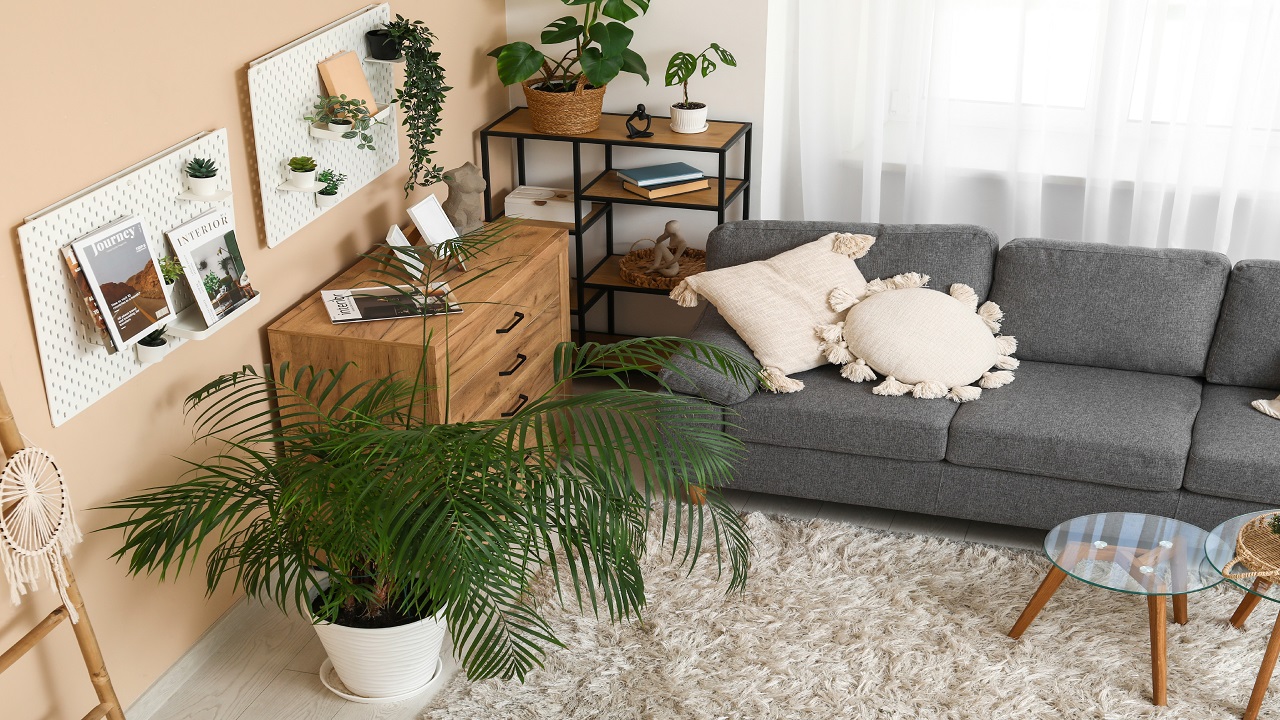
What this is: Nine image-based furniture placement rules for small rental living rooms, each grounded in a real styled room you can learn from directly.
Who it’s for: Style-curious renters who want a practical framework before buying or rearranging any furniture in their space.
Why read it: Each rule is shown in a real room so you can see exactly what works and apply it to your own layout.
In This Article
- Pull Your Sofa Away from the Wall
- Face Your Sofa Toward a Focal Point
- Tuck a Chair Into Every Corner You Have
- Arrange Seating So People Actually Face Each Other
- Use a Large Rug to Define a Narrow Room
- Style the Wall Above Your Sofa With a Floating Shelf
- Position Your Sofa to Borrow Natural Light
- Let Your Pendant Light Lead the Room
- Questions and Answers
You finally have the keys to your new rental. The living room looks a lot smaller than you expected.
And you’re not quite sure where to even begin. Maybe you’ve already pushed the sofa against the wall, or bought a rug that was just a little too small for the space.
It happens to almost everyone. The good news is that furniture placement can completely change how a room feels, and you don’t have to guess your way through it.
These nine rules give you a clear, simple framework to work with before you spend a dollar on anything new.
1. Pull Your Sofa Away from the Wall
Source: INSTAGRAM.
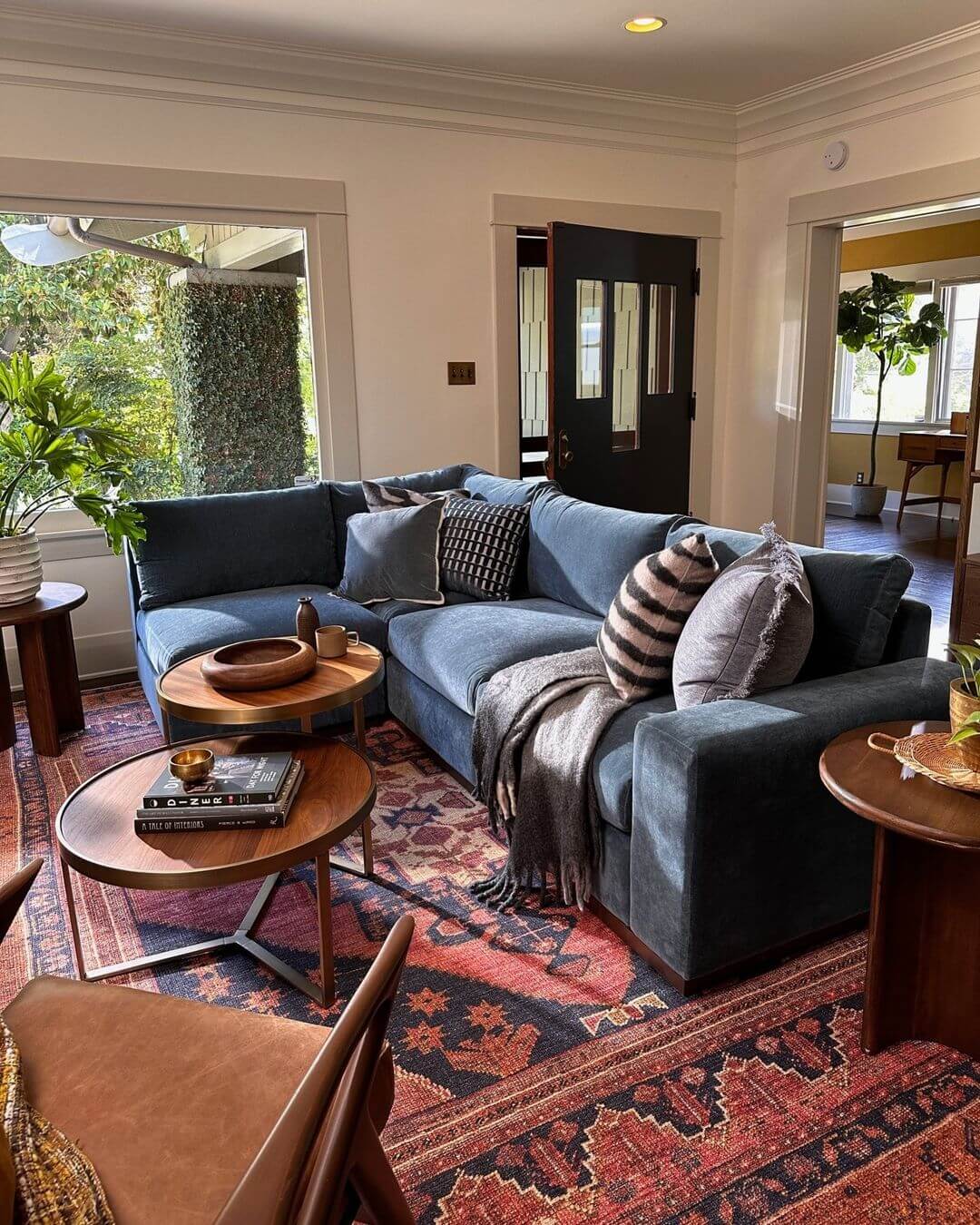
Pushing the sofa against the wall is the most common mistake renters make. It actually makes a small living room feel emptier, not bigger.
Pull it forward. Even a foot of breathing room behind the sofa changes everything. The blue sectional here floats in the center of the room, anchored by a large patterned rug.
That rug is really doing a lot of work. It defines the whole seating zone without needing walls to hold the furniture in place.
The two round coffee tables are placed just close enough to reach easily from the sofa. Everything feels grouped and easy to use. Your furniture doesn’t need a wall to lean on. It just needs a good rug to land on.
2. Face Your Sofa Toward a Focal Point
Source: INSTAGRAM.
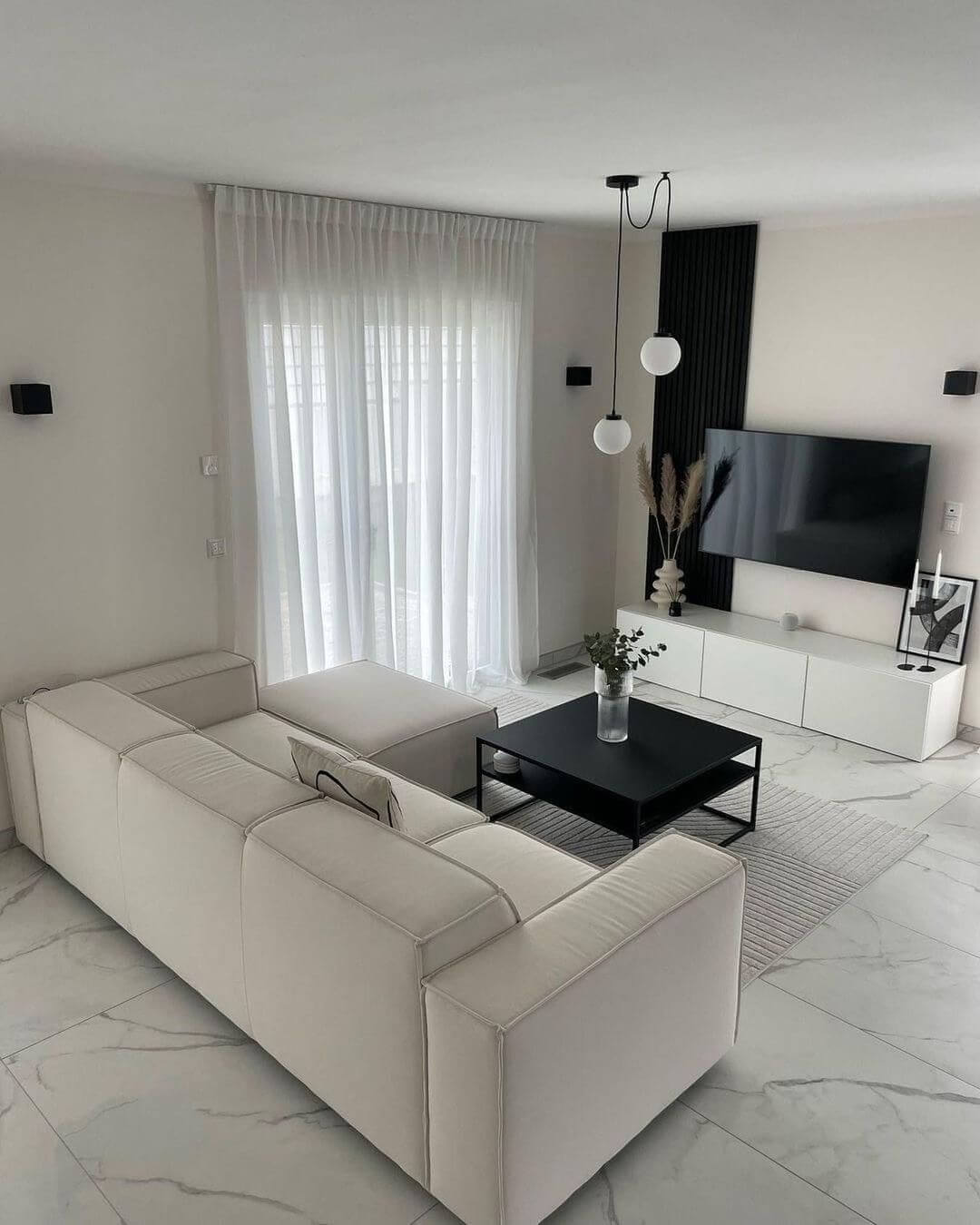
Every small living room needs one thing to look at. Pick it before you place a single piece of furniture.
Here, the TV wall is the focal point. The cream sectional faces it directly. Nothing is fighting for attention. A black coffee table sits centered between the sofa and the screen.
That contrast keeps the all-white room from feeling flat. According to the American Society of Interior Designers, every well-arranged room benefits from one clear visual anchor. That gives furniture a direction to face.
Notice the rug underneath. It quietly ties the seating zone together without making the space feel crowded. When your furniture has somewhere to look, the whole room feels intentional. That’s the goal.
3. Tuck a Chair Into Every Corner You Have
Source: INSTAGRAM.
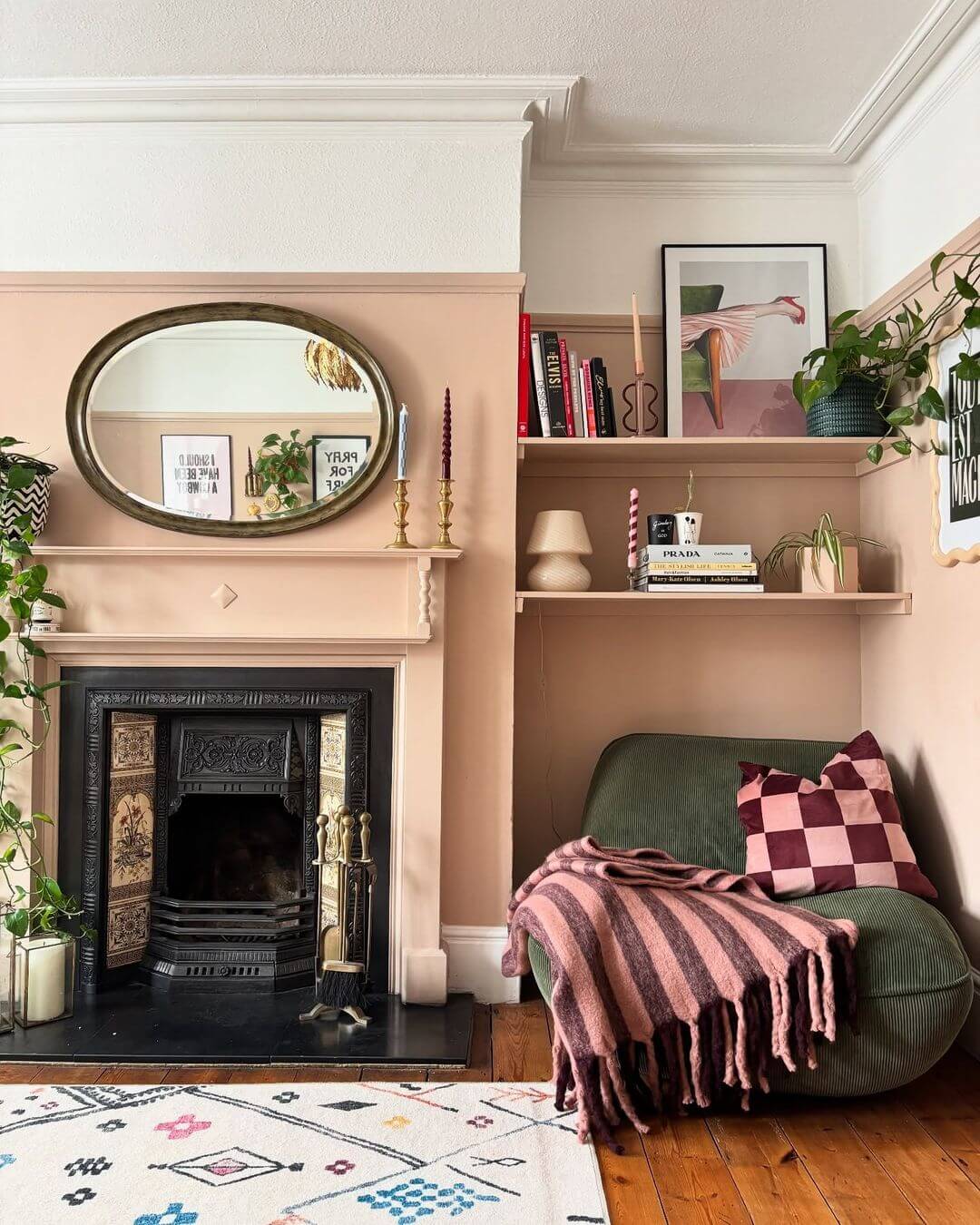
Dead corners waste space. A small chair fixes that fast.
Here, a green rounded armchair is tucked right into the alcove beside the fireplace. It uses a spot that would otherwise just collect clutter. The shelves above it work hard too.
Books, plants, and a small lamp fill the vertical space without crowding the floor. Rental-friendly living room decor works best when it goes vertical rather than spreading across the floor.
The fireplace becomes the room’s anchor. The oval mirror above it bounces light and makes the whole wall feel styled, not just functional.
You don’t need a big room to have a cozy reading nook. You just need one good corner.
4. Arrange Seating So People Actually Face Each Other
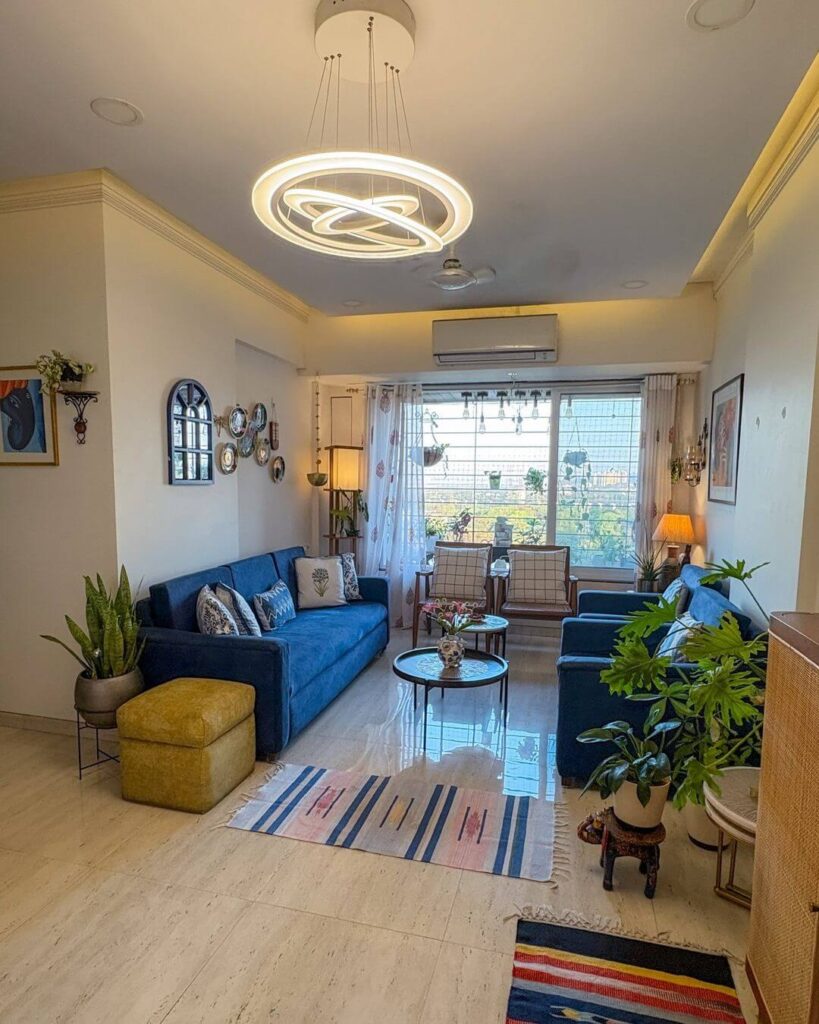
Source: INSTAGRAM.
Lining all your seats against the walls kills conversation. Pull them inward instead.
Here, two blue sofas face each other with a round coffee table between them. Two accent chairs sit closer to the window, creating a second, looser seating zone.
Good apartment living room layouts almost always use this facing-furniture technique to create togetherness in a compact space. A mustard ottoman fills the gap at the sofa’s end.
It adds seating without blocking the walkway. Plants are tucked into every open corner. They soften the edges without taking up floor space you actually need.
The result feels full, warm, and easy to move through. That balance is everything in a small rental.
5. Use a Large Rug to Define a Narrow Room
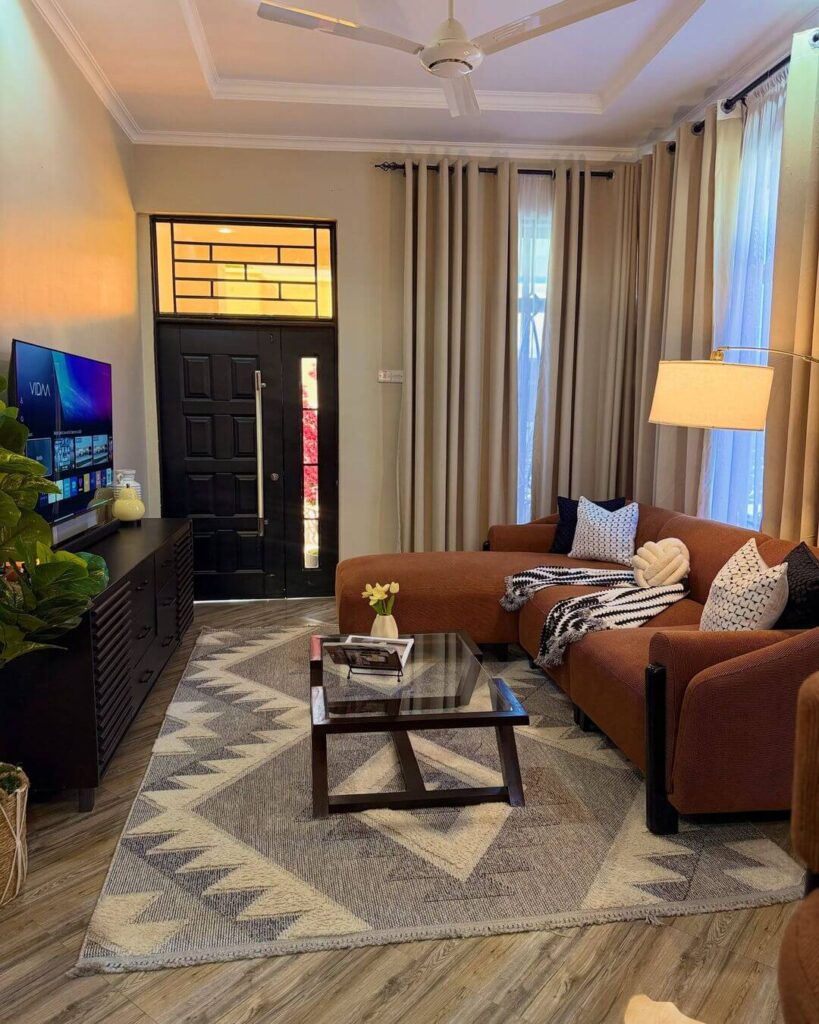
Source: INSTAGRAM.
Narrow rooms feel awkward fast. A large rug fixes the layout before you move anything else.
Here, the geometric rug stretches almost wall to wall. It pulls the rust sofa and glass coffee table into one clear zone.
Apartment Therapy notes that choosing a rug that’s too small, is one of the most common decorating mistakes in small rooms.
This is because it makes furniture look disconnected from everything around it. The TV console sits directly opposite. That face-off arrangement works because the rug holds everything together visually.
A floor lamp fills the corner behind the sofa. It adds height and light without taking up any real floor space. Keep your walkway open down the center.
In a narrow room, that clear path is what stops everything from feeling cramped.
6. Style the Wall Above Your Sofa With a Floating Shelf
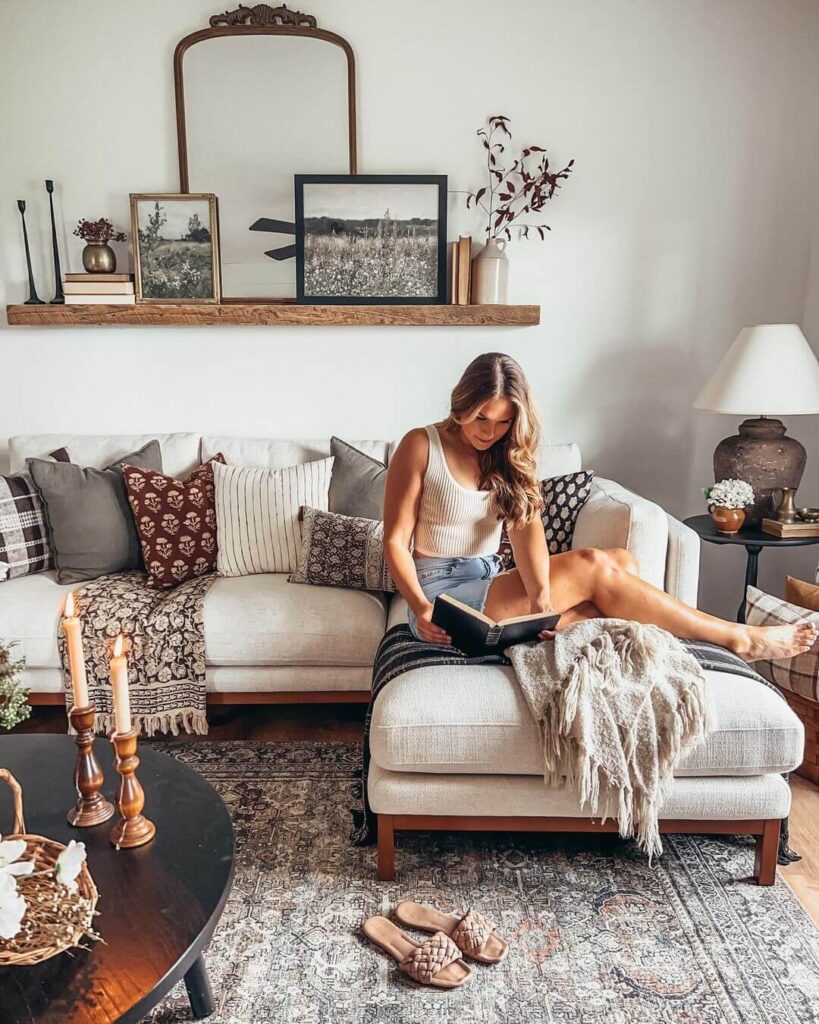
Source: INSTAGRAM.
Empty wall space above a sofa is wasted space. A floating shelf fixes that without any major commitment.
Here, a long wooden shelf runs the full width of the sofa. It holds framed art, a mirror, dried stems, candles, and stacked books.
All at once. Renter wall decor works best when it uses height rather than floor space. And a shelf like this is the cleanest way to do that. That mix of heights and objects keeps it from looking flat.
The mirror especially adds depth and bounces light around the room. You don’t need to hang anything directly on the walls. Just one shelf does all the heavy lifting. Renters, this one’s for you.
7. Position Your Sofa to Borrow Natural Light
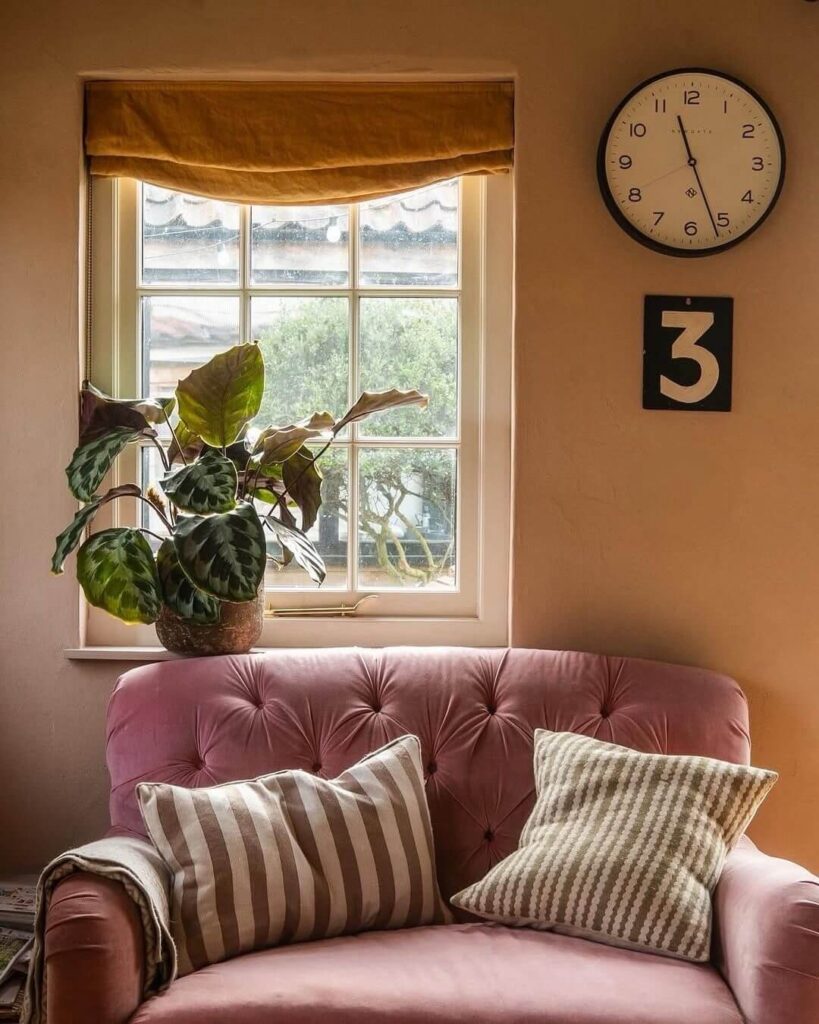
Source: INSTAGRAM.
Natural light is free decor. Use it by placing your sofa close to a window.
Here, the pink tufted sofa sits right in front of a sash window. The plant on the sill gets light. The sofa gets warmth.
The whole corner feels alive. Better Homes & Gardens notes that positioning seating near natural light sources is one of the simplest ways to make any room feel larger and more welcoming.
If you’re decorating your first rental apartment, this is a free upgrade worth trying before anything else. The wall beside the window does something smart too. A round clock and a simple number sign hang there.
No gallery wall needed. Just two objects with personality. A linen Roman blind softens the window without blocking the light. Small detail, big difference. Your rental windows deserve more than bare curtains.
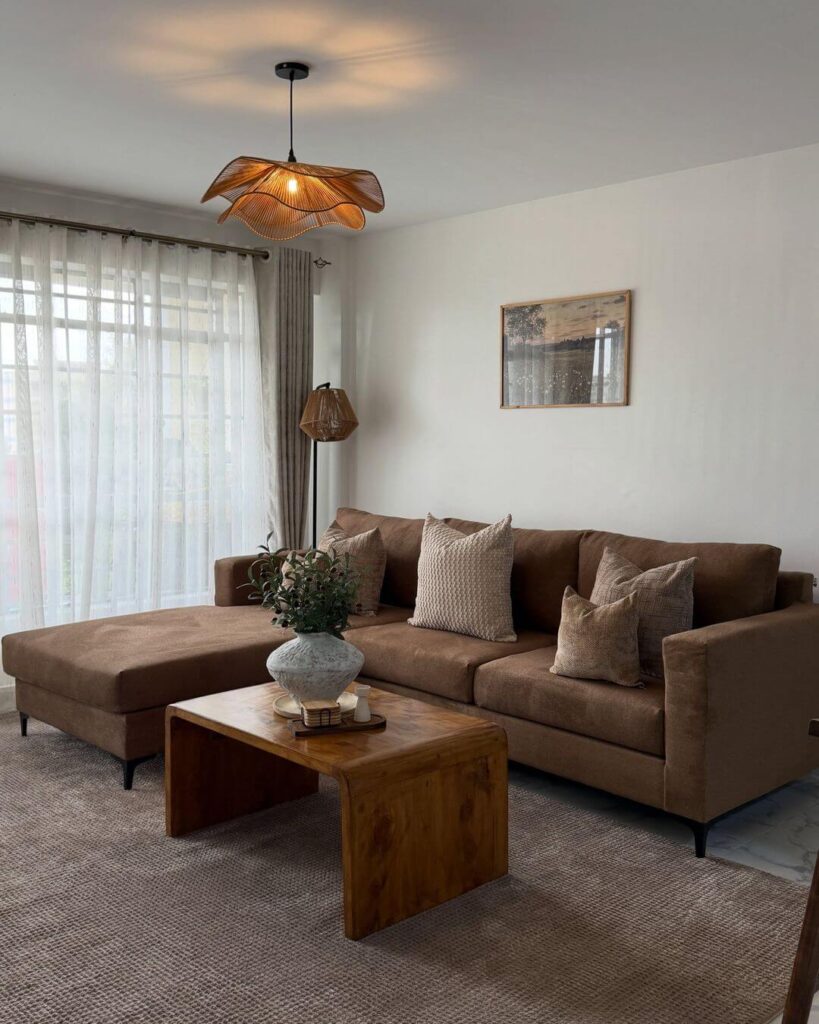
8. Let Your Pendant Light Lead the Room
Source: INSTAGRAM.
Most renters stop at a floor lamp. But a pendant light changes the entire feel of a room.
Here, a woven rattan pendant hangs centered over the seating area. It draws your eye up and makes the ceiling feel intentional, not just empty space above your head.
Architectural Digest recommends treating overhead lighting as a design element in small rooms. Not just a utility fix. Because it adds warmth and visual height that floor lamps alone can’t achieve.
A pendant is also a practical option for any compact apartment living room where floor space is already limited. The brown sectional and solid wood coffee table keep everything grounded.
The pendant adds warmth without cluttering the floor. One framed print on the wall. One vase on the table. Nothing overdone. When your lighting is strong, your decor doesn’t have to work as hard.
Questions and Answers
Should I push my sofa against the wall to save space?
No. Pulling your sofa away from the wall by even a foot actually makes the room breathe more. Floating furniture in the center, anchored by a good rug, makes a small living room feel bigger and more deliberately styled overall.
How big should my rug be in a rental living room?
Your rug should be large enough that front legs of every sofa and chair sit on it. A rug that’s too small leaves furniture looking disconnected. When in doubt, size up. A bigger rug is almost always the better choice.
What counts as a focal point if my rental doesn’t have a fireplace?
Your TV wall works perfectly. So does a large window or a console with a mirror. According to Architectural Digest, any strong visual anchor at one end of a room can serve as an effective focal point for your furniture.
Can I use a pendant light if my rental has fixed ceiling fixtures?
Yes. Plug-in pendant lights hang from a hook and plug into a standard socket. They give you the look of a hardwired fixture without any electrical work or landlord permission. It’s one of the easiest rental upgrades you can try.
Is it worth buying two smaller coffee tables instead of one large one?
Absolutely. Two round tables give you more flexibility than one large rectangular one. You can pull them apart for extra floor space, or push them together for more surface area. They also flow much better around any curved sectional sofa.
Getting your furniture placement right doesn’t require a big budget or a designer. It starts with a few smart decisions: pull your sofa forward, pick a focal point, and use a rug that’s big enough to anchor the room.
Let your corners work for you. Let your lighting do more than just light. These nine rules are your foundation. Once you understand them, every rental you live in starts to feel a lot more like home.
