
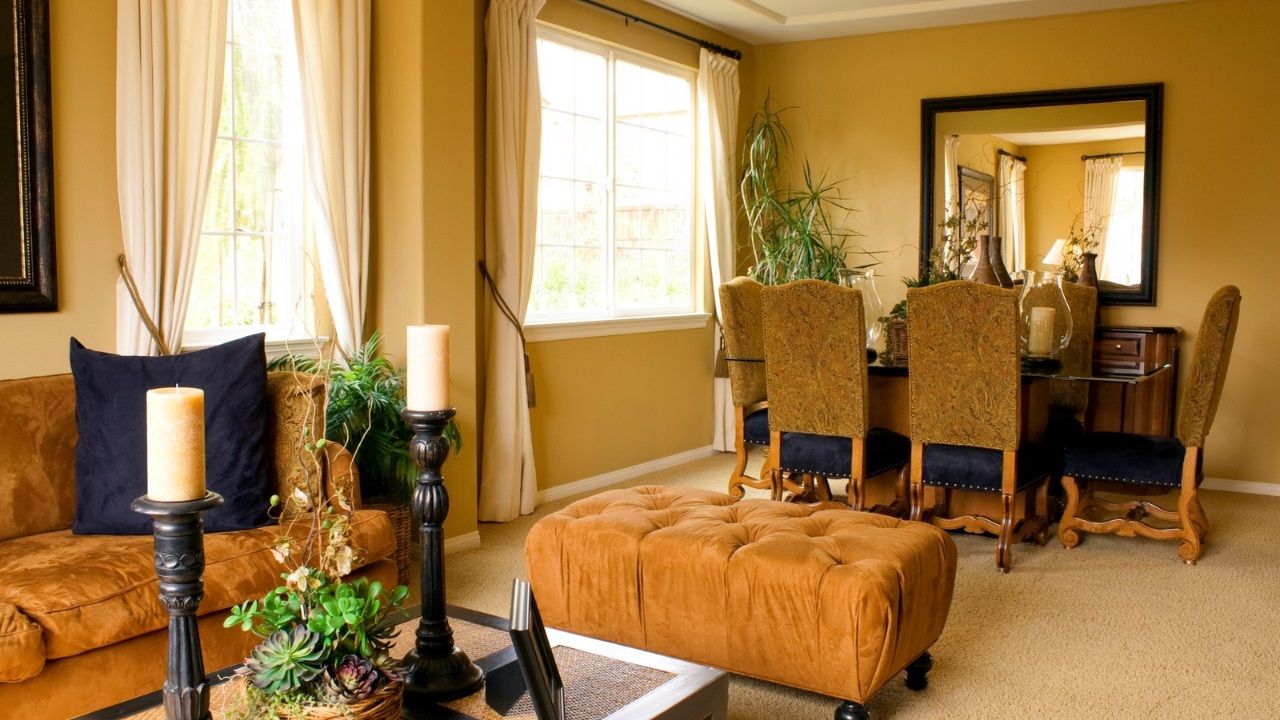
What this is: Nine real living room and dining combo setups for renters who need both areas in one room without overcrowding either.
Who it’s for: Studio and small-apartment renters who have no separate dining room and want both zones to feel purposeful.
Why read it: Each idea shows exactly how the decor is put together so you can copy the setup that fits your space.
In This Article
- 1. Use One Large Rug to Anchor Both Zones
- 2. Use a Pendant Light to Mark the Dining End
- 3. Anchor Your Dining Zone With a Dark Round Table
- 4. Define the Dining Zone With a Rug in an Open-Plan Room
- 5. Use Earthy Tones and Natural Materials Across Both Zones
- 6. Use a Sofa as the Bench on One Side of Your Dining Table
- 7. Give Each Zone Its Own Overhead Light for Clear Separation
- 8. Run One Accent Color Through Every Zone to Unify the Room
- 9. Repeat the Same Decor Objects Across All Three Zones
- Questions and Answers
Your rental has a living room. It has a bedroom. What it does not have is a dining room. So where do you eat? On the couch? At a coffee table with your knees tucked in? That gets old fast.
The good news is you do not need a separate room to eat like a human being. Plenty of small apartments handle this really well. You just need a few smart moves, the right furniture, and a layout that works for your specific space.
I pulled together nine living room and dining combo setups that actually work. Each one keeps both areas feeling like their own space, without crowding the room or making it feel like a cluttered furniture showroom.
1. Use One Large Rug to Anchor Both Zones
Source: INSTAGRAM.
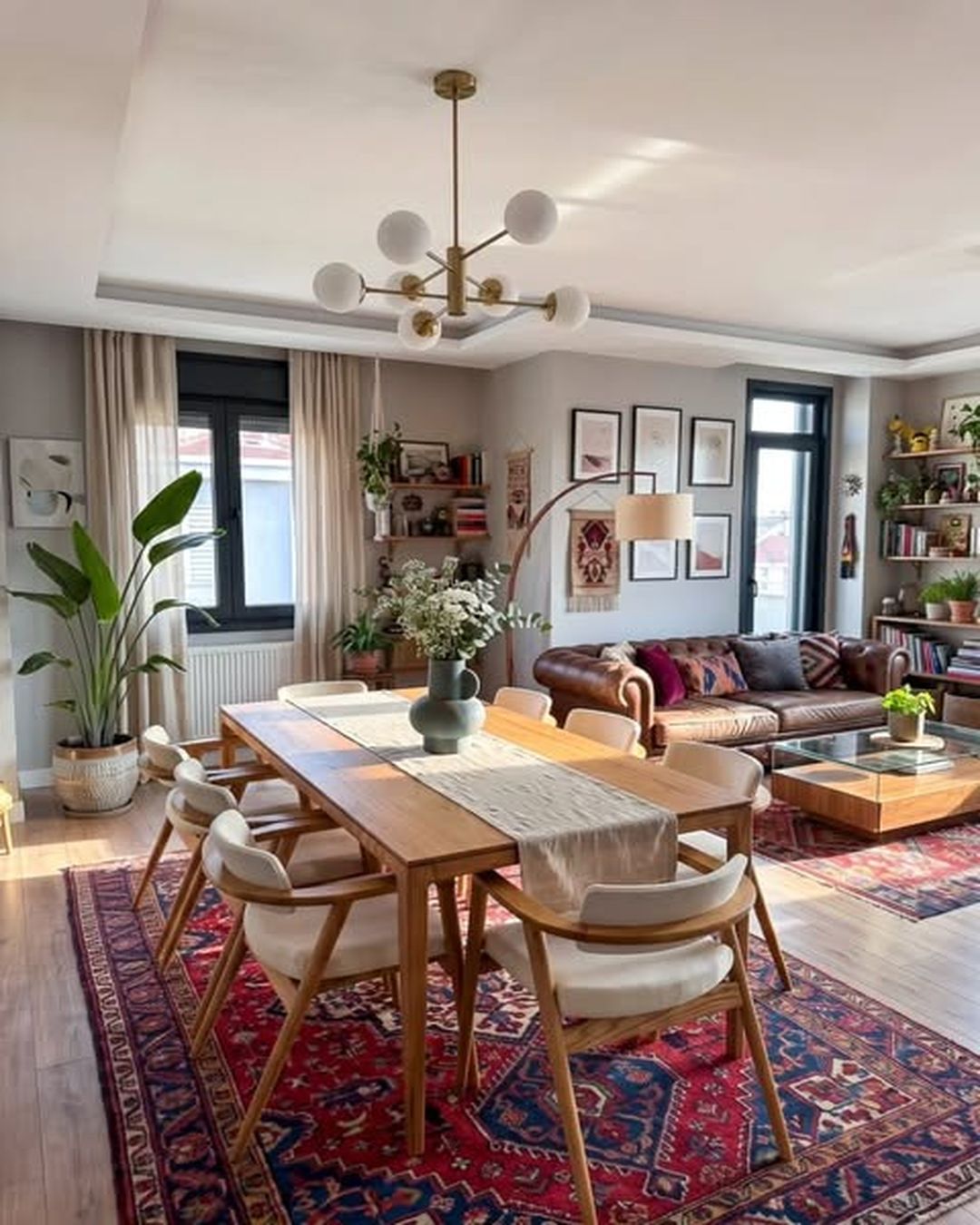
The trick here is the rug. A large Persian-style rug stretches across the full length of the room, running under the dining table and reaching into the living area.
That single piece of fabric quietly connects the two zones without merging them. The dining table sits on one end, the sofa on the other.
Same floor, same rug, two completely different purposes.
The wood tones help hold it all together too. The dining chairs match the coffee table, and both echo the warm oak flooring underneath.
The brass chandelier above the table signals “this is the eating spot” without needing a wall or a room divider to say so. If you want to try this, go for a rug that is generously sized. Too small and it looks lost.
2. Use a Pendant Light to Mark the Dining End
Source: INSTAGRAM.
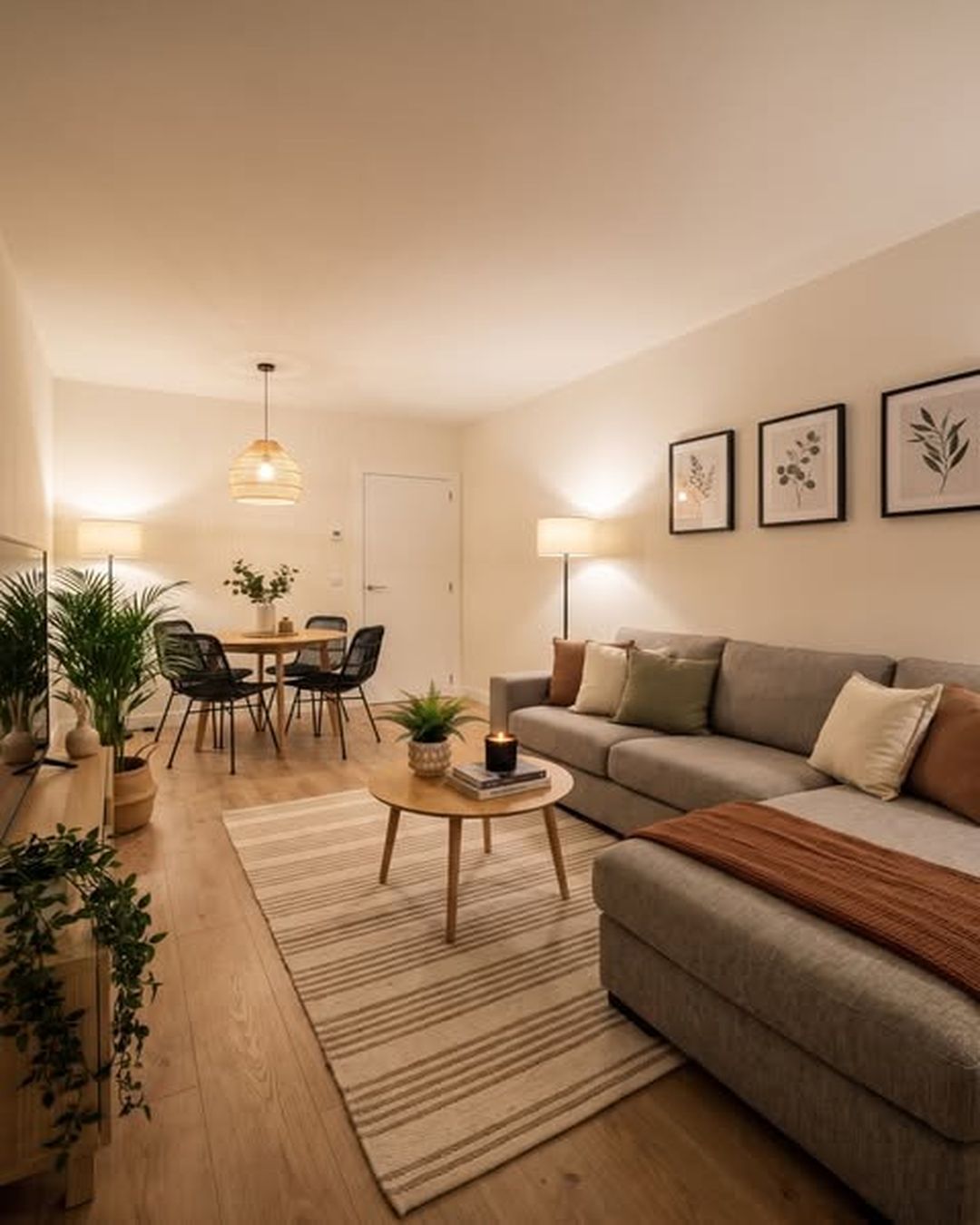
Start with your sofa and rug near the entrance. That becomes your main living zone.
Then push the dining table all the way to the far end. A round table works well in a narrow room. It still seats four without taking over the space.
The rattan pendant light above the dining table marks the dining spot. No divider or room screen needed. Just that one light and everyone knows where to eat.
Keep the colors warm and consistent throughout the whole room. Soft neutrals, light wood tones, and a few plants are all you need to tie both zones together.
Related Guide: Your Rental’s Single Overhead Light Is Killing the Vibe — Here’s the Full Fix Without Rewiring Anything
3. Anchor Your Dining Zone With a Dark Round Table
Source: INSTAGRAM.
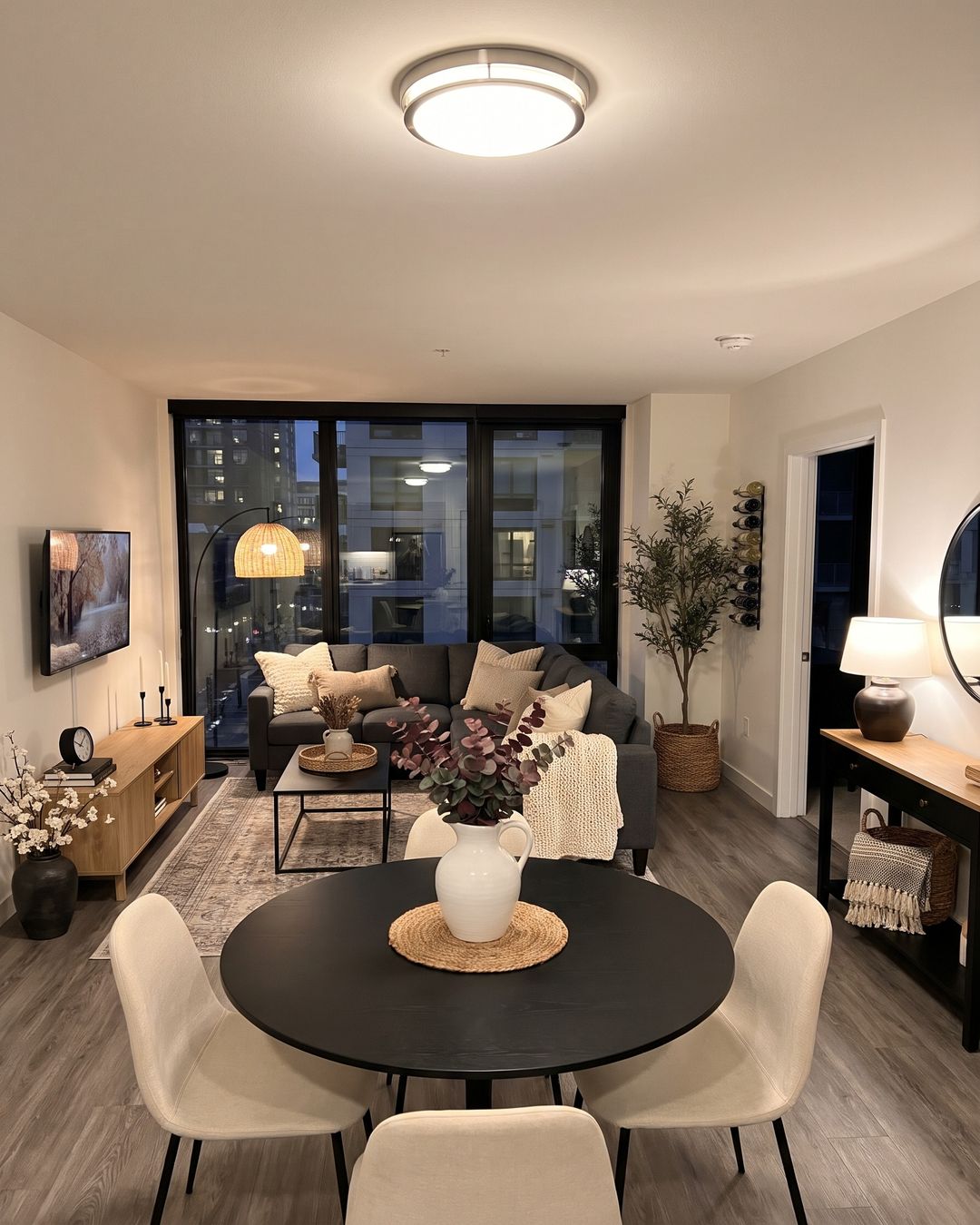
A dark round table near the entrance instantly creates your dining zone. Pair it with cream upholstered chairs. The contrast is bold and clear.
That color difference does the separating for you. No pendant light or room divider needed. If you enjoy dark, moody contrast in a room, this setup gives you a taste of it without committing the full space to it.
Push your sofa and rug toward the back wall. The gap between both areas becomes your natural zone border.
Keep the table decor very simple. One white ceramic vase on a woven placemat is really all it takes.
Related Guide: How to Arrange Furniture in a Small Rental Living Room (Even If the Layout Makes Zero Sense)
4. Define the Dining Zone With a Rug in an Open-Plan Room
Source: INSTAGRAM.
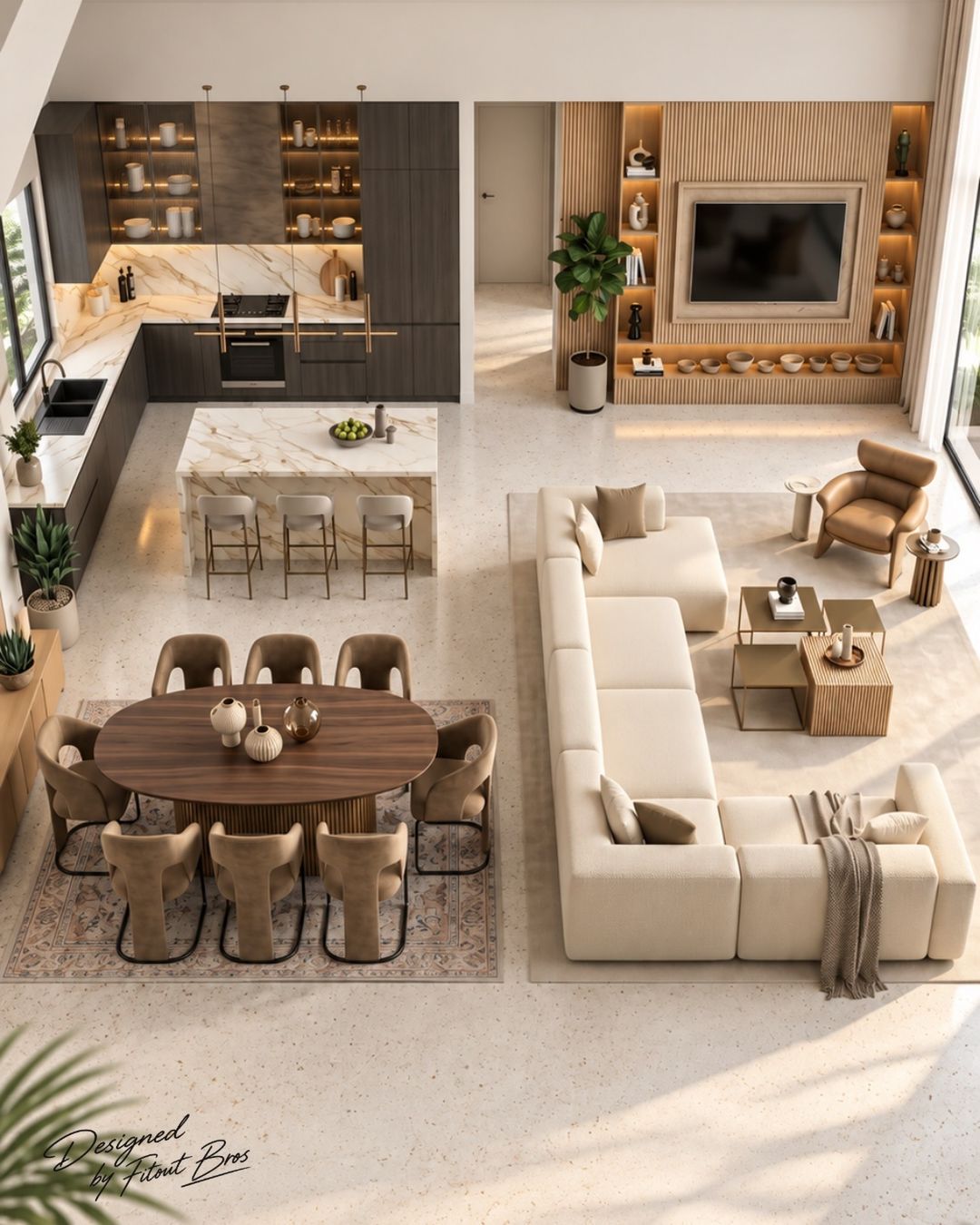
When living and dining share one open floor, a rug is your best tool. Place it only under the dining table. That creates the zone.
The sofa and living furniture sit right beside it. No wall needed between them. Just two areas sharing the same room.
Keep tones consistent across both zones. Same warm neutrals connect them without making the room feel split.
A round or oval table softens the dining zone. It feels less rigid in open-plan rooms. One critical detail: get the rug size right.
HGTV confirms the dining rug needs to be large enough so chairs stay on it when pulled back.
Related Guide: Weird Rental Layout? 13 Small Living Room Fixes That Work Around Every Awkward Feature
5. Use Earthy Tones and Natural Materials Across Both Zones
Source: INSTAGRAM.
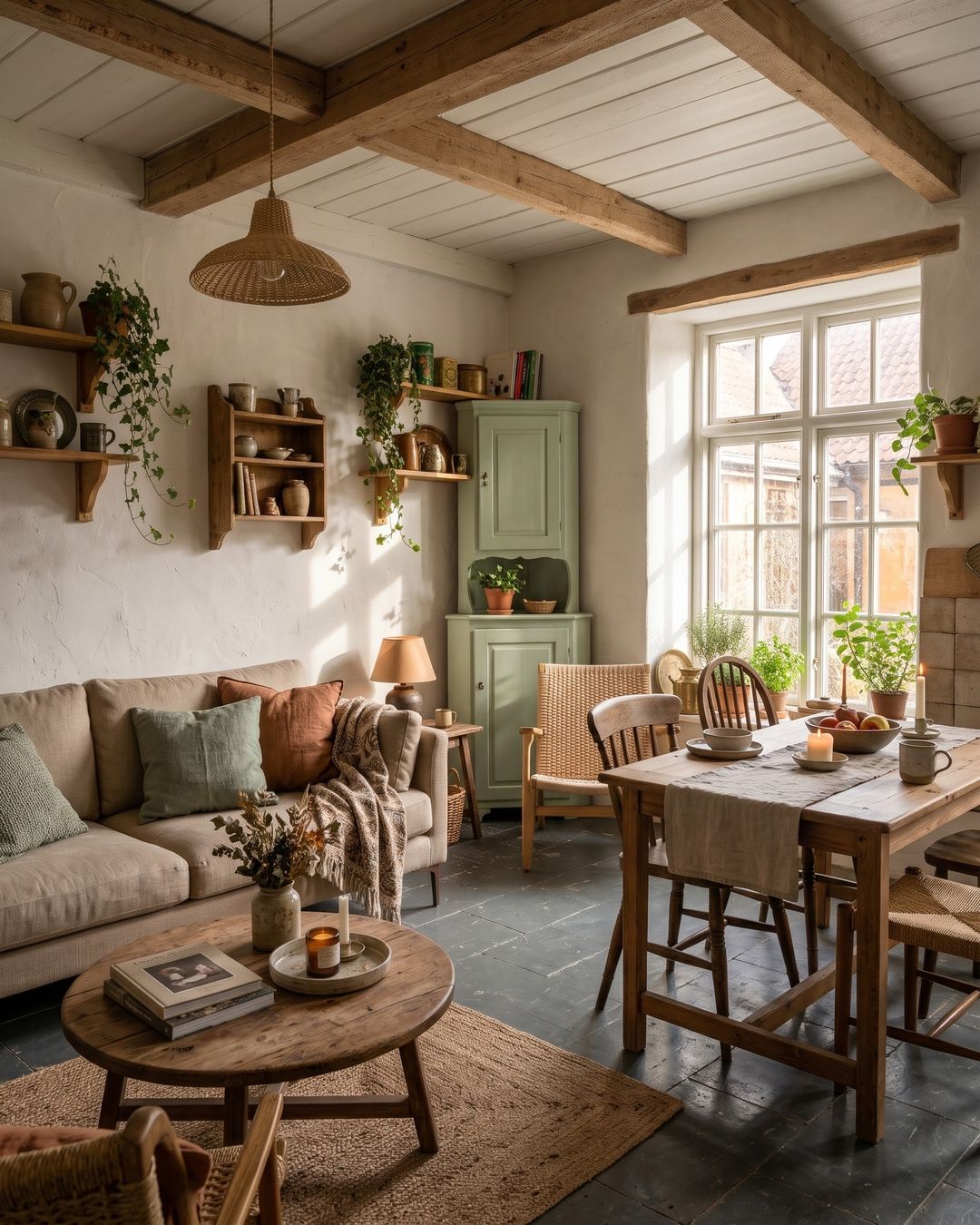
Both zones use the same earthy palette. Warm wood, stone floors, cream linen, and sage green run through the whole room.
That consistency is what makes it work. You do not need a divider when both sides already feel like one place.
A jute rug anchors the living area on hard floors. It softly marks where the sofa zone starts without blocking the room.
Layer plants and pottery on open shelves. A few trailing vines add warmth to both zones.
Related Guide: 11 Small Rental Living Room Ideas for Farmhouse Charm Without Shiplap or Permanent Changes
6. Use a Sofa as the Bench on One Side of Your Dining Table
Source: INSTAGRAM.
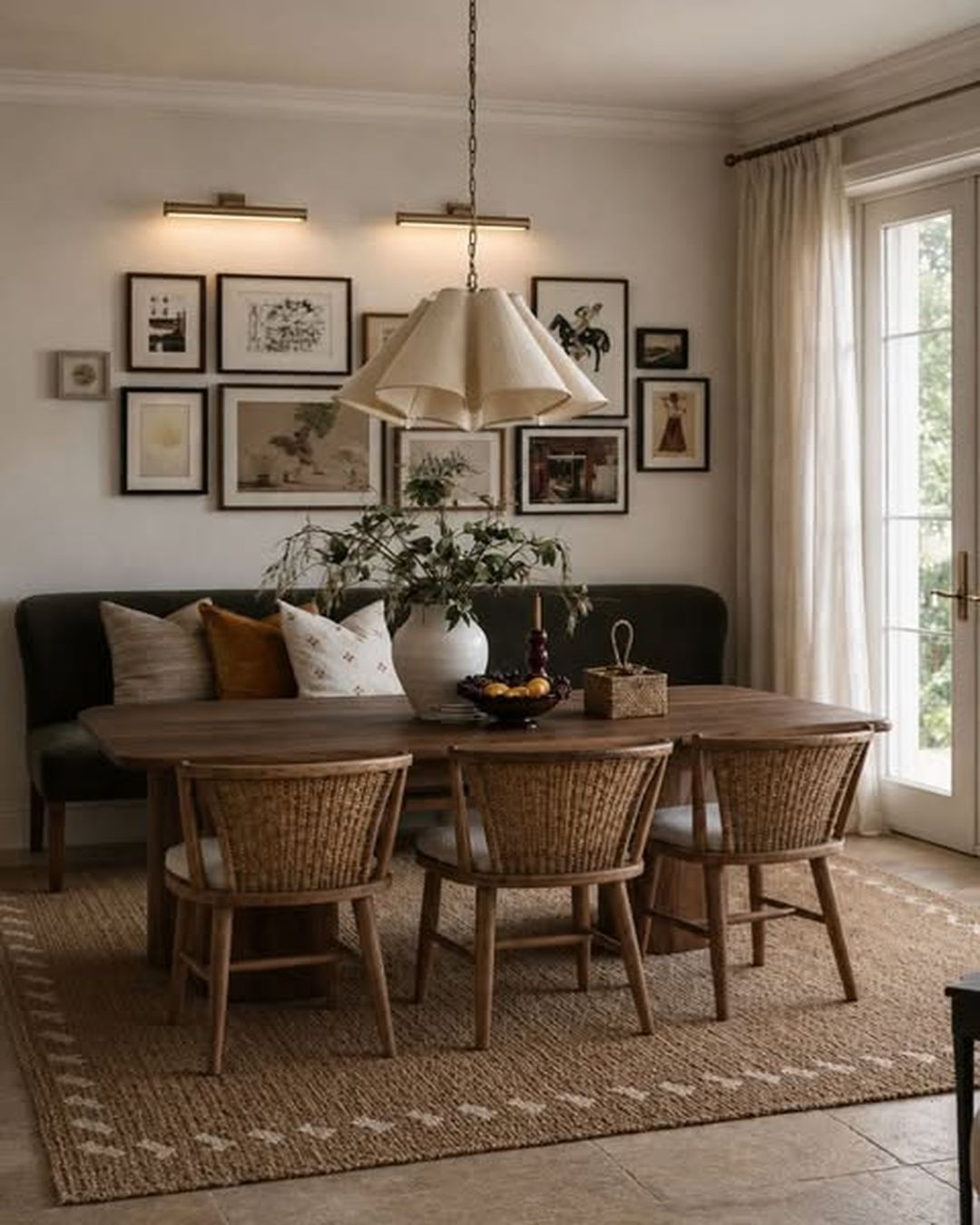
Put a sofa against the wall and slide the dining table in front of it. That one move gives you seating for both living and dining.
The sofa works as a bench on the dining side. Add a few throw pillows and it looks planned, not improvised.
Hang a gallery wall above the sofa. It makes the dining spot feel finished and complete.
A pendant light above the table ties it all together. It signals this is the dining zone.
Related Guide: Throw Pillow Formula for Small Rental Living Rooms: Exactly How Many, What Sizes, and What Not to Do
7. Give Each Zone Its Own Overhead Light for Clear Separation
Source: INSTAGRAM.
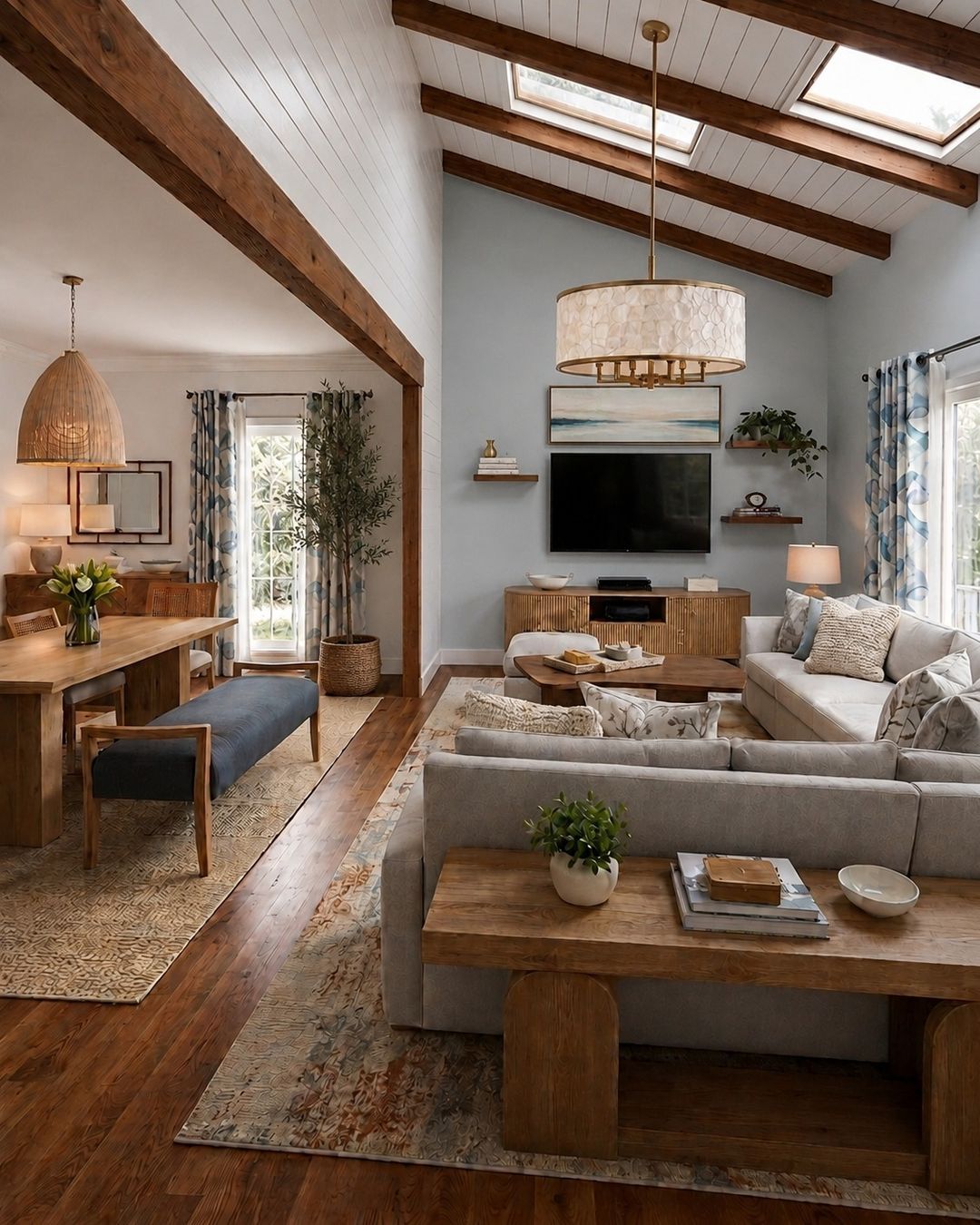
Give each zone its own overhead light. One side gets a rattan pendant, the other a drum chandelier. That difference alone marks them as separate.
You do not need a structural beam. Two different lights above two zones read the same way. Add a large mirror in the living zone too. It bounces the light and makes that side feel even bigger.
Keep wood tones consistent across both areas. Cream upholstery and a warm rug color do the rest.
Add one large plant between the two zones to soften the transition. It makes the whole space feel natural and easy.
Related Guide: 9 Scandinavian Rental Living Room Ideas for an Airy Nordic Look Without Touching the Walls
8. Run One Accent Color Through Every Zone to Unify the Room
Source: INSTAGRAM.
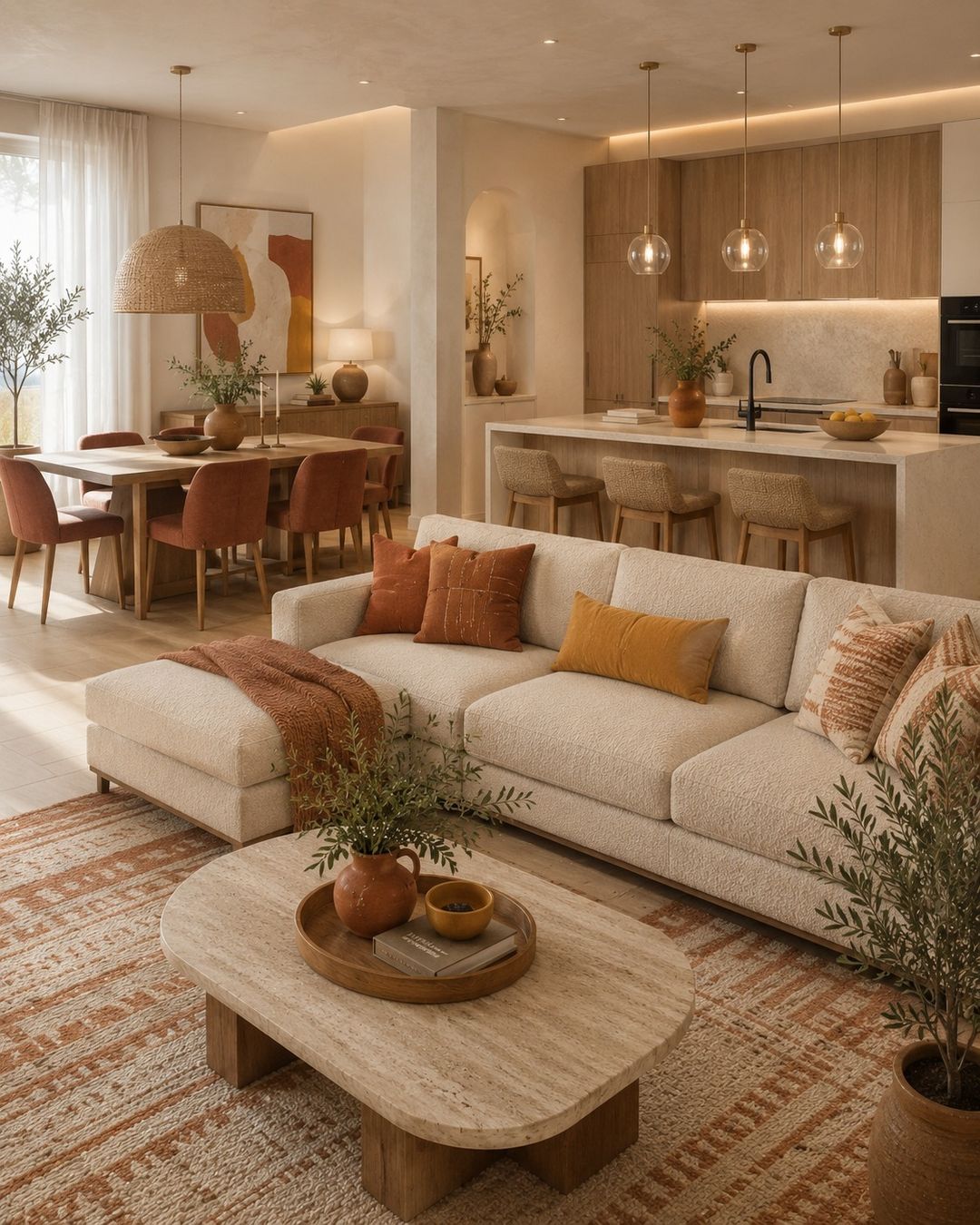
Pick one accent color and use it everywhere. Here it is terracotta. It shows up in the dining chairs, the sofa cushions, the rug, and the decor accessories.
That repetition is what makes the room feel pulled together. No zone feels like an afterthought. They all speak the same color language.
Start with your sofa cushions. Then echo that color in your dining chairs and mid-century style pieces. A rug in the same tonal family locks it all in.
Warm wood furniture throughout helps too. Keep your coffee table, dining table, and shelving in similar wood tones. That consistency carries well across every zone.
Related Guide: 7 Quiet Luxury Ideas That Prove Your Rental Doesn’t Have to Look Like a Rental
9. Repeat the Same Decor Objects Across All Three Zones
Source: INSTAGRAM.
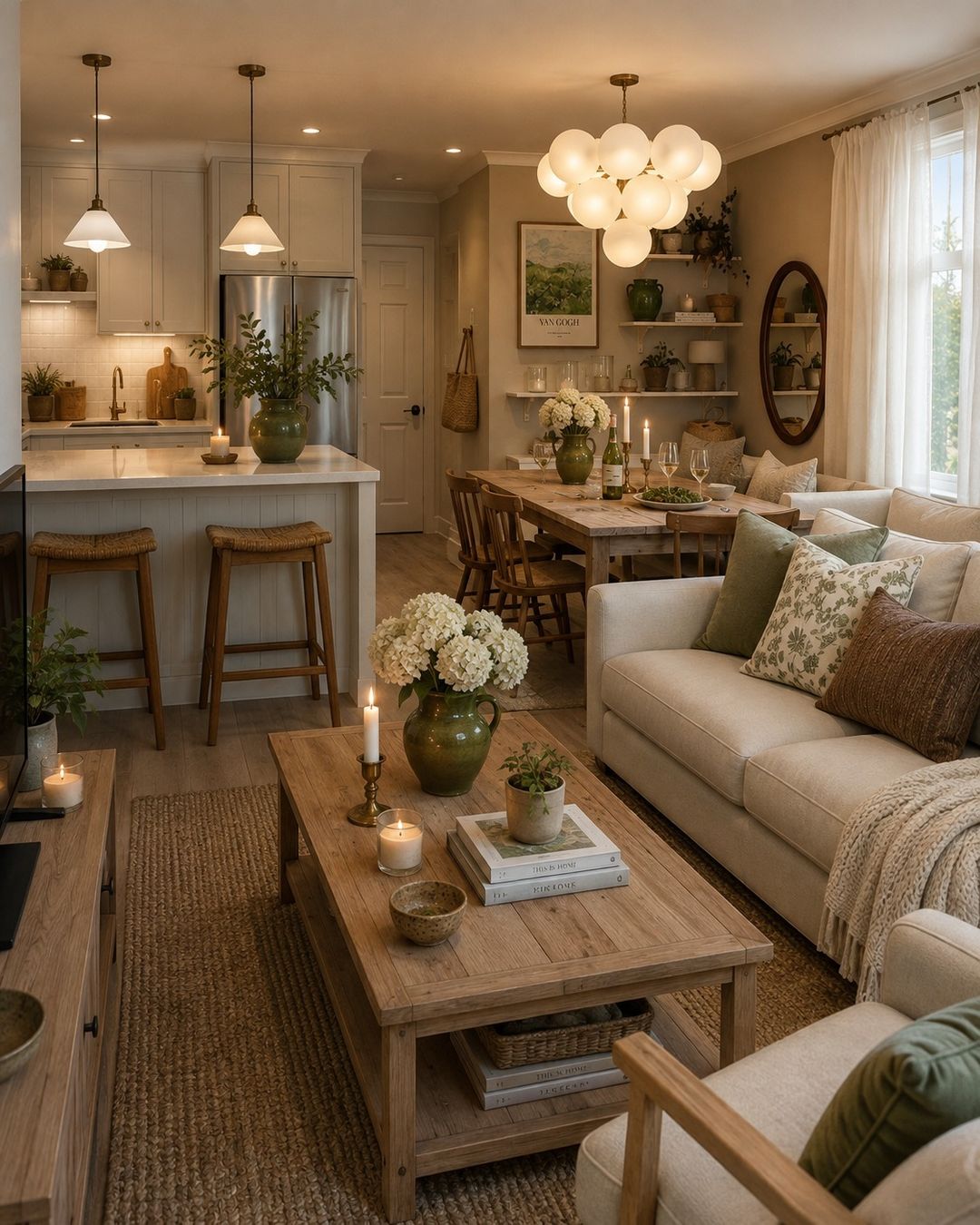
Pick two or three decor items and repeat them across every zone. Here it is green ceramic vessels and candles.
You see them on the coffee table, dining table, kitchen counter, and shelves.
That repetition is what pulls the whole room together. Your eye moves from one zone to the next and everything feels connected.
It is the same approach used in layered boho rooms where repetition creates richness instead of chaos.
The cluster chandelier above the dining table marks that zone. It is bold enough to hold the space without competing with the living area.
Keep the base palette calm. Cream, warm wood, and sage green run from one end of the room to the other.
Related Guide: 9 Ways to Make Your Rental Living Room Feel Cozy Instead of Like a Temporary Stop
Questions and Answers
How do I know if my rug is big enough for the dining table?
Pull a chair back as far as you normally would when sitting down. The back legs should still sit on the rug. According to Apartment Therapy, aim for at least 24 inches of rug beyond the table on all sides.
How high should a pendant light hang above a small dining table?
For a standard 8-foot ceiling, The Spruce recommends hanging a dining pendant 30 to 36 inches above the tabletop. Too high and it loses its zone-defining power. Too low and it feels cramped when you are sitting down.
Is a round or rectangular table better for a small living and dining combo?
Round tables work better in tight spaces. No sharp corners means you can move around more freely. A four-seater round table takes up less visual floor space than a rectangular one and makes the whole room feel noticeably more open.
Do both zones need separate rugs or can one large rug cover both areas?
One large rug covering both zones works really well, as shown in idea one. It connects the whole room visually. Separate rugs work too, but the dining rug must be large enough so chairs stay on it when pulled back.
What do I do if my rental room is so small that adding a dining table feels impossible?
Look at fold-down or wall-mounted drop-leaf tables first. They give you a real dining spot when you need it and fold away when you do not. A narrow console table can also easily double as a dining table for two.
Does the accent color have to match across both the dining and living zones?
They can vary slightly, but Architectural Digest suggests anchoring both zones in the same dominant color family. Small tonal differences are fine. Just avoid a sharp color break that makes one zone feel separate from the rest of the room.
You do not need walls to make two zones work in one room. A single rug, a pendant light, or one repeated accent color can do the separating for you. Pick the idea that fits your room shape first. Build from there. Your rental can handle both.
If you are just starting out, the complete guide to decorating your first rental apartment walks through every room from scratch. For a stripped-back version of this same challenge, the minimalist rental apartment guide keeps things very clean and simple.
