
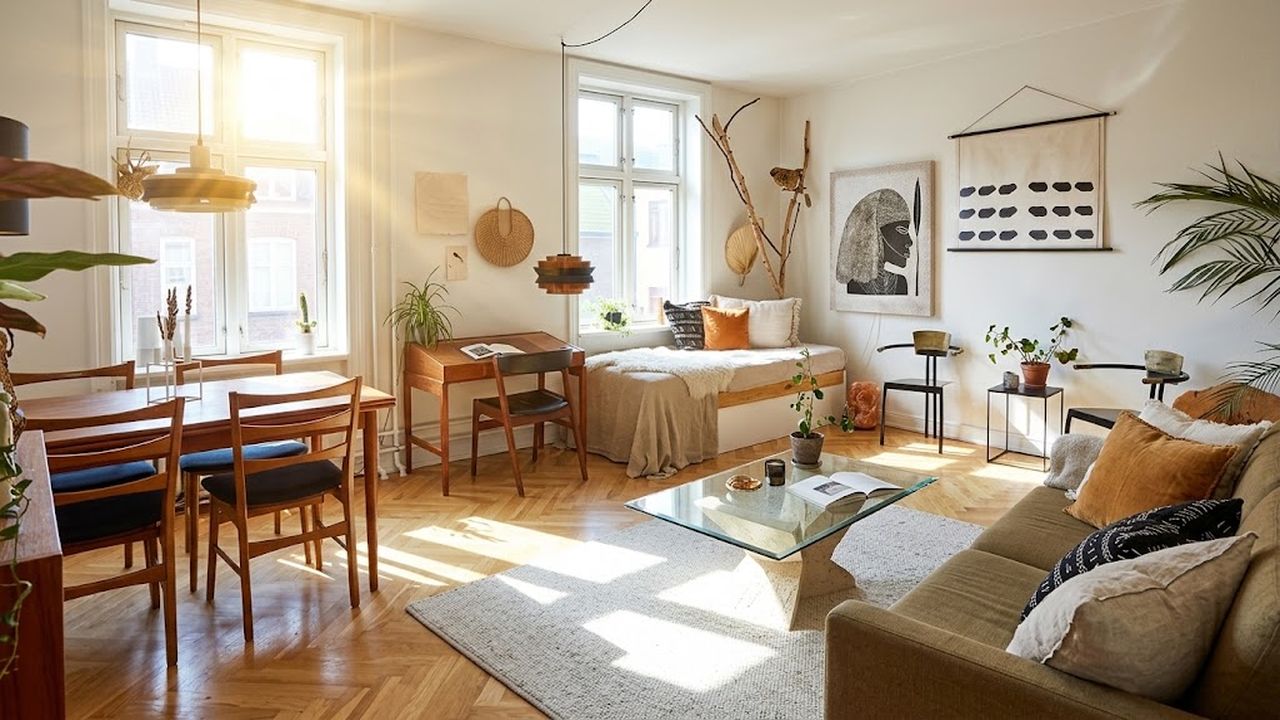
You know the feeling. The living room has three chairs and a bookshelf and a side table and still somehow nothing has a place.
The counter has things on it that don’t belong in the kitchen. The bedroom is where everything ends up when there’s nowhere else to put it. The space is busy, but it doesn’t feel like yours.
That’s the problem a minimalist small rental apartment solves. Not by making things look sparse. Not by getting rid of everything you own. By being deliberate about what earns a place and what doesn’t.
Most people assume minimalism means a white room with one chair and a cactus. It doesn’t.
The current direction in 2025 and 2026 is warmer: natural wood, soft neutrals, textured fabrics, earthy tones.
It’s liveable and calm, not cold. And rental-friendly minimalist decor is, by its nature, deposit safe. Less stuff, removable essentials, no permanent changes required.
This guide goes room by room. The living room, bedroom, kitchen, and bathroom. Then three rules that hold it all together. Start wherever the clutter is worst.
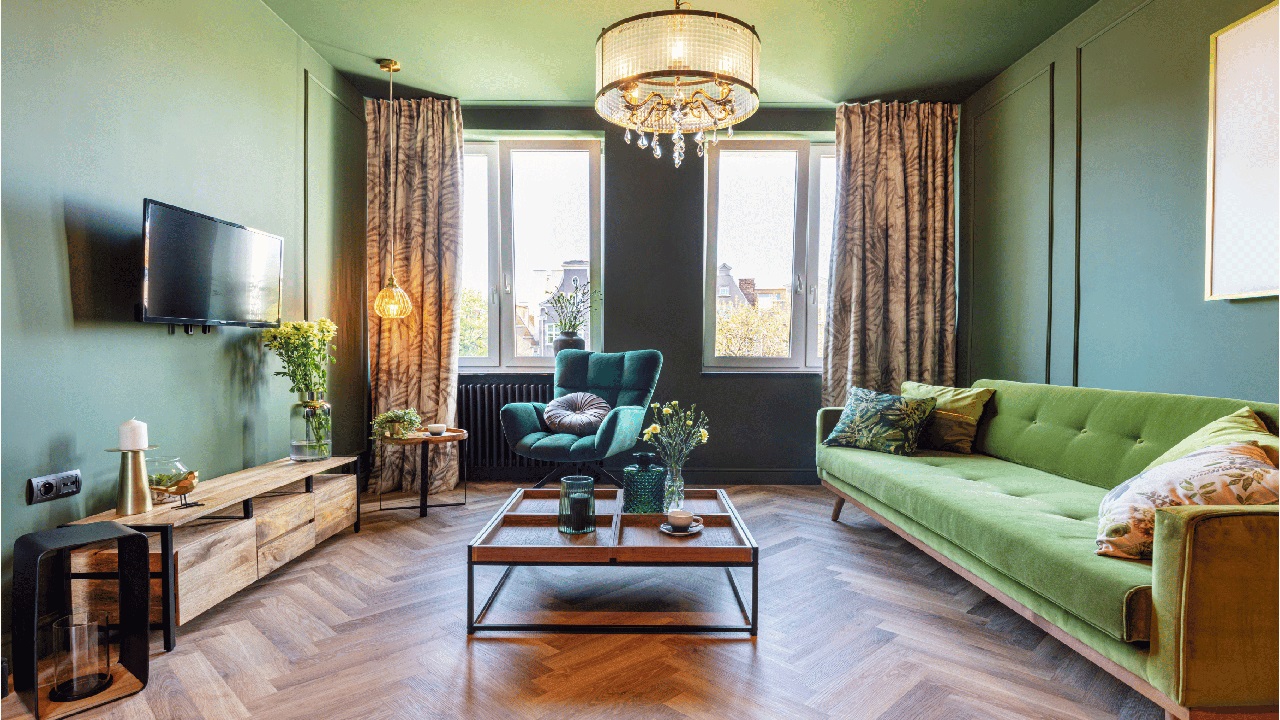
Source: Canva.
What Minimalism Actually Means for Renters
Minimalism sounds like giving up half your stuff and sitting on the floor. That’s not what it is.
A better definition: every item earns its place. Not “own less” but “be deliberate.” Maverick Frame Studio describes it as a discipline of subtraction.
Choosing fewer, better things and giving them room to breathe.
The open space around your objects is not wasted space. It’s the point. This matters even more in small apartments.
Cramming in furniture and then trying to style around it is backwards. The open floor, the breathing room between the sofa and the wall, the clear counter — that space is the design.
Protect it instead of filling it.
This isn’t just a style preference; it’s a decision that affects how you feel in your home every day.
The research backs this up, and the good news is that the process is highly practical for renters:
-
It protects your focus: A 2026 Stacker feature citing peer-reviewed findings from Princeton’s Journal of Neuroscience found that visual clutter continuously competes for limited attention and reduces focus.
-
It lowers daily stress: A UCLA study linked cluttered home environments to elevated cortisol levels, and a 2025 Journal of Environmental Psychology paper found more clutter correlated with lower life satisfaction.
-
It requires editing, not buying: Minimalism doesn’t require expensive new furniture or clearing out everything you own. It requires removing what doesn’t earn its place — before adding anything at all.
-
It is completely deposit-safe: Because the aesthetic lives in textiles, lighting, furniture placement, and accessories rather than paint or structural changes, you can transform the space without risking your deposit.
-
It feels warm, not sterile: Warm minimalism solves the most common objection to the style by using earthy neutrals, warm whites, natural wood, and muted accent colours to create a calming, inviting environment.
Warm Minimalism
Lower cortisol, protect your focus, and keep your deposit safe.
If budget is a concern, there are plenty of renter-friendly small apartment upgrades that cost very little. But start with the edit first.
That step is free. Once you have a feel for minimalist apartment decorating ideas in practice, the room-by-room sections below give you the plan.
Start where you spend the most time awake: the living room.
The Living Room: Clear Space, Calm Vibe
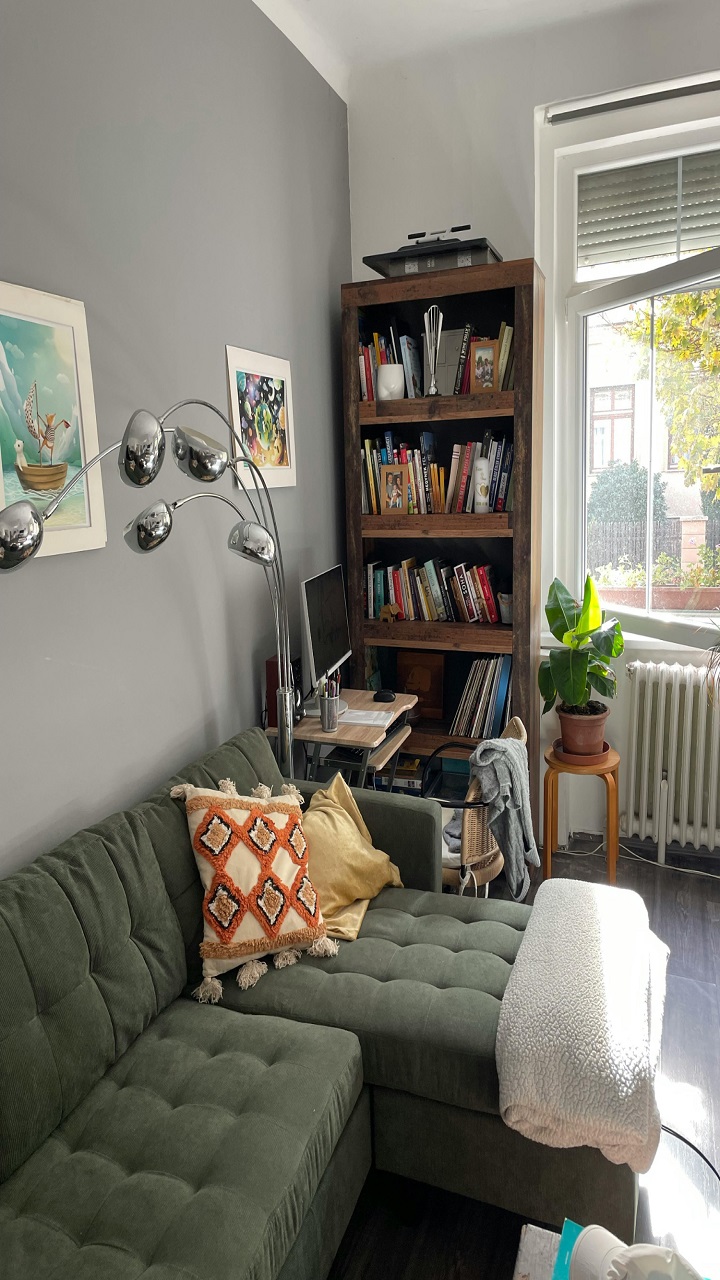
The living room tries to do everything. It holds the sofa, the TV, the bookshelf.
The extra chair nobody sits in, the side table with the candle collection, and the three picture frames that don’t quite go together. The eye lands everywhere and rests nowhere.
Small space minimalist design fixes this by establishing a clear hierarchy. One main furniture piece, one anchor element, and enough empty space that the room can breathe.
Edit Before You Add
Before you buy anything, remove things. Take three or four items out of the living room and put them somewhere else.
Notice what happens to the room. This step costs nothing and teaches you more than any mood board.
Most rental living rooms have too much in them, not too little. The edit is where the transformation actually happens. The purchases, if any, come after.
Choose One Sofa, One Rug, and One Anchor Point
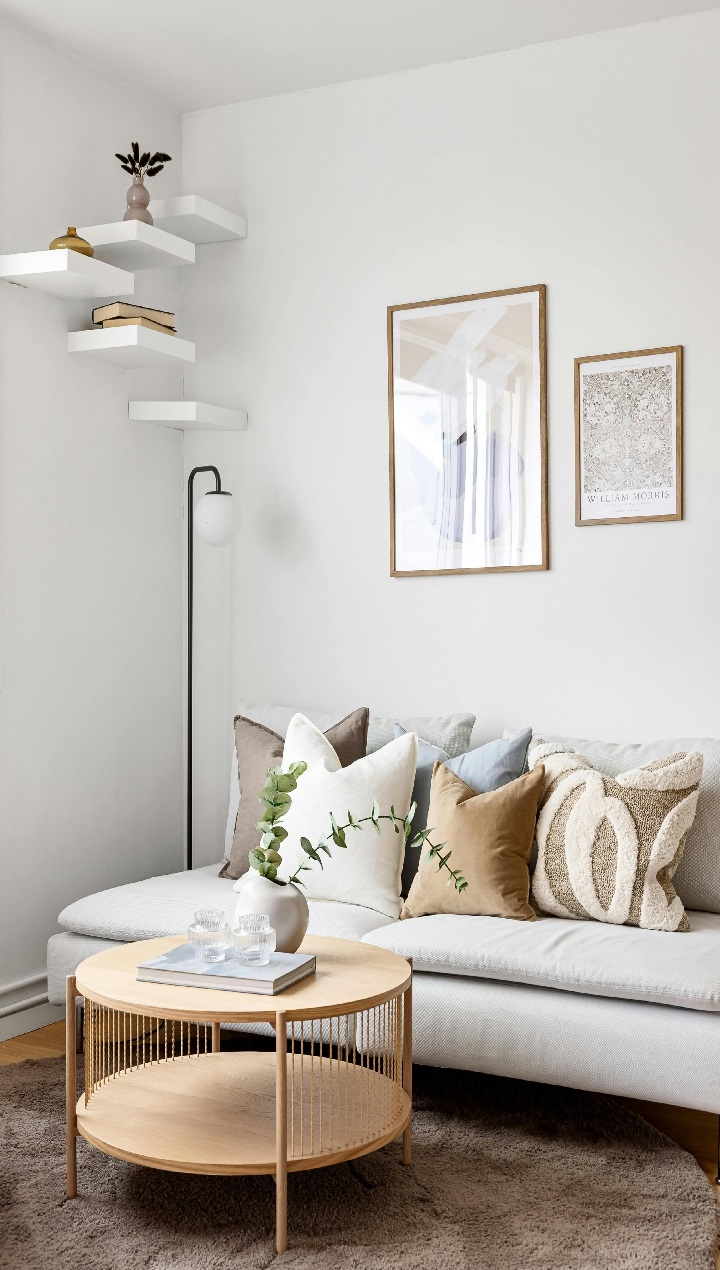
The sofa does most of the work in a minimalist living room. Choose one that fits the space without being pushed against every wall.
Low-profile silhouettes with clean lines keep the room feeling open. One sofa. Stop there.
To create a cohesive, curated living area without overwhelming the space, focus on these core design principles:
-
Let a neutral rug do the heavy lifting: A neutral-toned area rug anchors the seating zone and signals “this is a complete space” without adding visual noise. In a small room, it works hard to define the area.
-
Stick to the three-piece anchor approach: Supported by the Chairish minimalist design guide, your living room really only needs three essentials: a sofa, a coffee table, and strategic lighting.
-
Follow the 60-30-10 colour rule: Hold the space together with 60% dominant neutral (walls and sofa), 30% secondary tone (rug and curtains), and 10% accent (one plant, one cushion colour, one object). This framework applies to the whole apartment, not just one room.
-
Embrace negative space on your walls: One piece of art outperforms five scattered prints every time. An empty wall is a deliberate design choice, and it’s always better than a busy one. (If you do hang art, use damage-free options that work in any rental without nails or drilling).
-
Swap overheads for warm corner lighting: Overhead lighting flattens a space. Adding a single floor lamp with a warm bulb (2700K) in the corner makes the room feel considered and changes the mood more than almost any furniture purchase.
For more deposit-safe living room ideas, there are plenty of directions to take the space once the edit is done.
A living room with one sofa, one rug, one warm lamp, and one piece of art on an otherwise empty wall isn’t sparse. It’s the quietest, most restful room you’ve ever had.
Minimalist Space Builder
Apply the 5 rules of minimal living to curate your space.
Result
Feedback goes here.
The Bedroom: A Minimal Sleep Sanctuary
The bedroom is where you start and end every day. It’s also where visual clutter causes the most damage. Not just aesthetically, but functionally.
Research from the Sleep Foundation connects cluttered bedroom environments to disrupted sleep and reduced rest quality. A calmer room is a practical choice, not just an aesthetic one.
The Bed Is the Design
In a minimalist bedroom, the bed carries almost all the visual weight.
Crisp neutral bedding, two matching pillows, one throw — and the room already looks intentional. You don’t need a gallery wall or a decorative tray collection.
The bed is doing the work.
For minimalist bedroom inspiration for small rentals, there are 15 real examples of what this can look like in practice. The design principle is consistent: the bed is the focal point, everything else recedes.
Clear the Surfaces
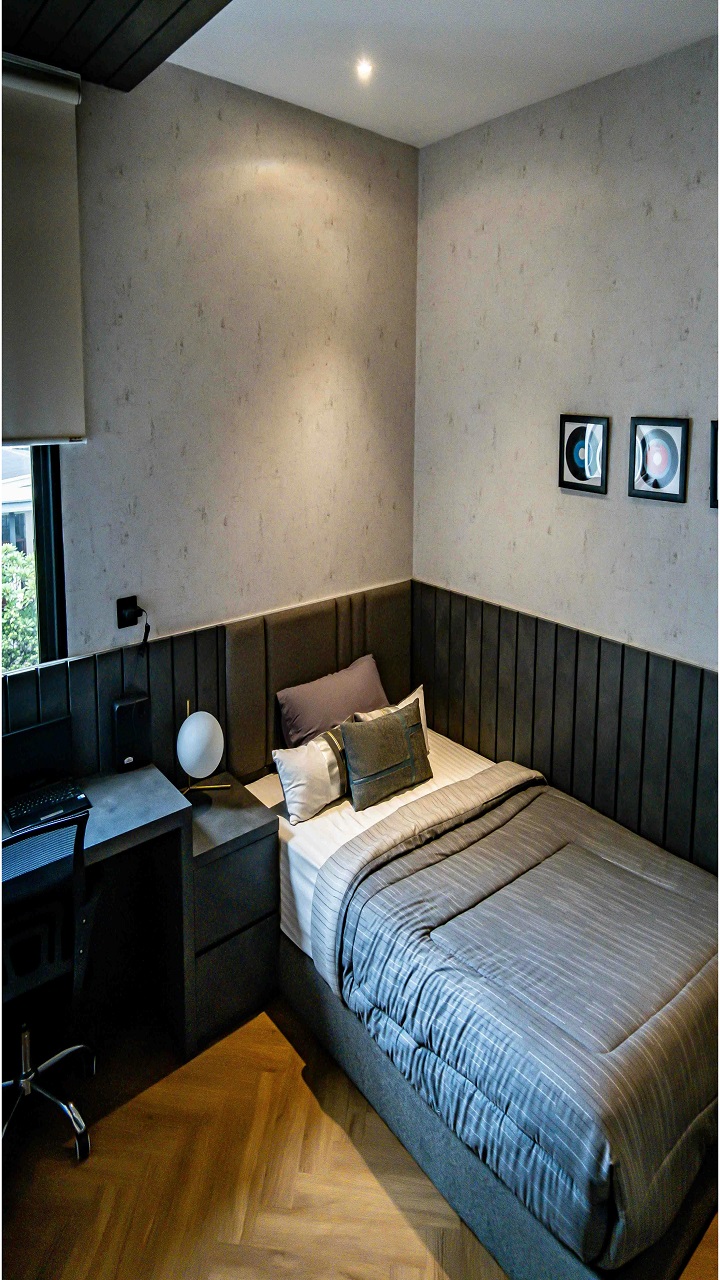
A nightstand with only a lamp and one personal object. No pile of books. No charging cables spilling across the floor.
Under-bed storage handles what doesn’t fit in the wardrobe. The Sleep Foundation notes that using vertical and under-bed space is one of the most effective ways to free floor space and create an airier feel in a small bedroom.
An accent chair that holds clothes isn’t serving two purposes. It’s serving zero. If a piece of furniture is a dumping ground, it earns no place in a minimalist bedroom.
For deposit-safe bedroom upgrade ideas that go further, there’s a full list of practical renter-friendly steps without any of the permanent changes.
Lighting and Colour for Rest
Warm light only. A bedside lamp rather than overhead lighting in the evenings.
The Sleep Foundation specifically notes that low colour temperature and low illuminance makes it easier to feel drowsy.
Swap the overhead bulb for a warmer option and add a small lamp to the nightstand. That’s the whole lighting plan.
For colour, soft neutrals work best: warm whites, muted sage, dusty blush. Tonal rather than matching. Calmer colours support rest, and this is design that is also evidence based.
Renter note: peel-and-stick wallpaper on one wall — the headboard wall — is a deposit-safe way to add depth without paint. It counts as the single accent element for the room. One is enough.
Strip the bedroom back to just the bed and essential storage for one weekend. Add back only what you genuinely missed. A calmer bedroom isn’t just better design. It’s a better night’s sleep.
The Kitchen: Counter Space Is the Goal
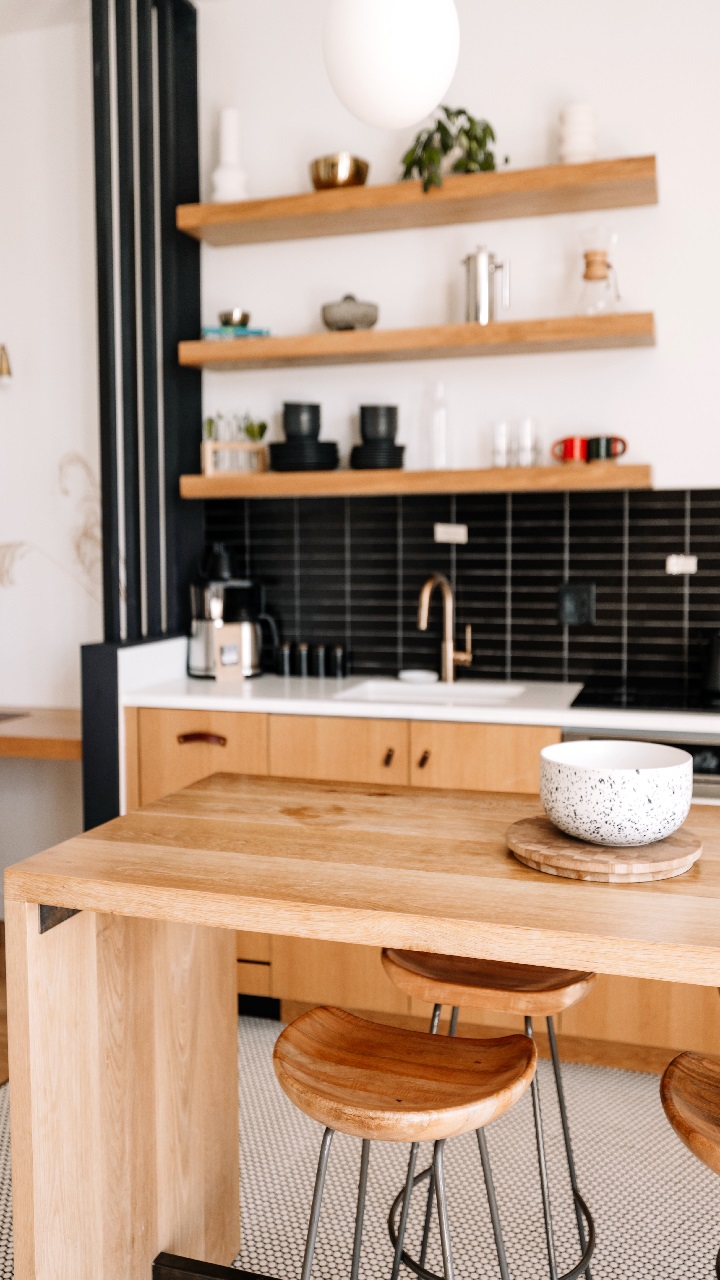
Rental kitchens rarely look good even when they’re clean. There’s always a toaster, a coffee maker, a jar of utensils, a fruit bowl, a stack of takeaway menus.
And something from another room that somehow ended up here. Every surface has something on it.
The minimalist goal in a kitchen isn’t new countertops. It’s clear countertops. That’s the whole project.
Start by taking everything off the counter. Everything. Put it in a cupboard or on the floor.
Then look at the empty counter for a moment before deciding what goes back. To achieve and maintain this intentional, rental-friendly design, follow these steps:
-
Limit counter items: Keep only one functional appliance (the coffee maker or kettle, not both unless used daily), one container for utensils, and one living element (like a small herb pot). Everything else lives in a cupboard.
-
Decant dry goods: Store pasta, rice, and oats in matching glass jars. This instantly makes open shelves or a counter corner look styled and intentional, costs almost nothing, and requires zero drilling.
-
Swap cabinet hardware: Upgrade to a consistent finish to reinforce the minimalist decor without touching the lease. Just keep the originals in a labeled bag to swap back at move-out.
-
Install temporary tiles: Add a peel-and-stick backsplash in a simple tile pattern on one wall.
-
Define the floor: Put down a kitchen runner rug to define and warm the space.
Rental Minimalist
Upgrade your space without losing your deposit.
For a deeper list of deposit-safe kitchen upgrades for renters, there are options for every budget and every style direction.
If clearing the counter feels impossible because there’s nowhere to put things, that’s a storage problem, not a minimalism problem. Small kitchen storage ideas for renters solve the practical barrier first.
One last thing to avoid: “kitchen decor” that adds visual clutter. A row of small objects along the counter is the opposite of the goal.
The restraint is the design. Once you’ve handled the three busiest rooms, the bathroom and the cross-room principles feel manageable.
The Bathroom: Simple, Not Bare
Bathrooms collect products faster than any other room.
There’s the skincare lineup, the hair tools, the extra candles, the soap dispenser that doesn’t match the hand towel that doesn’t match the bath mat.
The result is a small space that looks busy even when it’s clean.
The minimalist bathroom principle is straightforward: only what you use every day is visible. One soap dispenser.
One hand towel. One small tray with two items on it. Everything else is stored out of sight or removed entirely.
A single-tier shower caddy or tension rod organiser keeps products vertical and out of the sightline.
An over-toilet ladder shelf handles what won’t fit in the cabinet. These two solutions deal with most rental bathroom storage problems without drilling or permanent fixtures.
For the one upgrade that ties the room together: coordinated accessories in a single finish.
Ceramic, brushed brass, or matte black. Pick one and use it for the soap dispenser, the toothbrush holder, and any hooks. New towels in the same tone. A bath mat with real texture. That’s all the decor the bathroom needs.
Renter note: peel-and-stick backsplash tiles can sharpen a bland sink wall. Confirm the product is water-resistant before installing, and avoid placing it inside the shower area where moisture exposure is higher.
For anyone who wants to go further, there’s a full guide to rental bathroom upgrades without a renovation that covers more options room by room.
The last section brings together the three rules that make all four rooms feel cohesive.
Three Rules That Apply in Every Room
Three Rules That Apply in Every Room
Four rooms with their own logic can easily end up looking like four separate projects. These rules are what make the apartment feel like one intentional home.
1. One Neutral Palette
Stick to One Neutral Palette across the whole apartment to create seamless continuity.
2. Warm Lighting
Use Warm Lighting in every single room to establish an inviting, cohesive atmosphere.
3. One Living Element
Incorporate at least One Living Element per space to breathe natural life into the design.
Stick to One Neutral Palette Across the Whole Apartment
The 60-30-10 rule works at the room level. It also works at the apartment level. When the palette is consistent across every room, the apartment reads as larger, calmer, and more considered, even if each room has its own accent.
The minimalist small rental apartment palette in 2025 and 2026 runs through warm whites, taupes, greiges, natural wood tones.
And one muted accent colour: dusty green, terracotta, slate blue. Both Chairish and Maverick Frame Studio confirm this direction as current and liveable. Not cold. Not clinical.
Renter application: you’re not painting. So the palette lives in textiles, rugs, cushions, art, and accessories. All removable. All controllable. Pick your tones once and repeat them throughout.
Use Warm Lighting in Every Room
This is the single most impactful change you can make across an entire apartment, and it costs very little.
Swap every overhead bulb for warm white, somewhere between 2700K and 3000K. Available at any hardware store. The difference in atmosphere is immediate.
Then add at least one lamp per room that isn’t overhead. A floor lamp in the living room, a bedside lamp in the bedroom, a small table lamp in the kitchen or bathroom if space allows.
LED strip lighting under a shelf also works. Layered warm light is a design decision, not just a comfort choice.
The Sleep Foundation’s guidance on lighting applies beyond the bedroom.
Low-temperature, warm light supports relaxation throughout the apartment, not just at bedtime. That’s an argument for consistent warm lighting in every room, not just where you sleep.
One Living Element Per Space
A single plant. A bunch of stems in a vase. A small pot of herbs on the kitchen counter. One per room.
This one rule signals “someone lives here intentionally” in a way no amount of decorative objects can replicate.
Research from the University of Reading and the Royal Horticultural Society found that lush, leafy plants with dense canopies provide the greatest indoor wellbeing boost.
So this isn’t just about aesthetics. It’s about how you feel in the space.
For renters, the most reliable choices are pothos, snake plants, and monstera. All three thrive in indirect light and handle occasional neglect without complaint.
For studio apartment readers, these three rules are also the key to how to make one room feel like several spaces.
Consistent palette and lighting create zones without walls. There’s a full breakdown of how to make one room feel like several spaces for anyone working with a single-room layout.
Apply these three rules consistently and the apartment stops feeling like a rental. It starts feeling like a home.
The Part That Matters Most
Minimalism in a small rental isn’t about emptiness. It’s about deliberate editing, warm neutrals, and giving every item a reason to be where it is.
It works especially well in rentals because it requires no permanent changes. The principles live in furniture placement, textiles, lighting, and one living element per room.
Start with one room. The one that bothers you most. Remove three things that don’t earn their place. See how the space changes before spending anything.
That first edit is usually enough to show you what minimalism actually feels like. Not stark. Not bare. Calmer than you expected.
From there, the rest of the apartment follows the same logic, room by room.
When you’re ready to add a few intentional pieces, here’s a list of affordable renter-friendly upgrades under $50 that fit the approach without breaking the budget.
The work doesn’t start with buying. It starts with removing. And that part costs nothing.
