
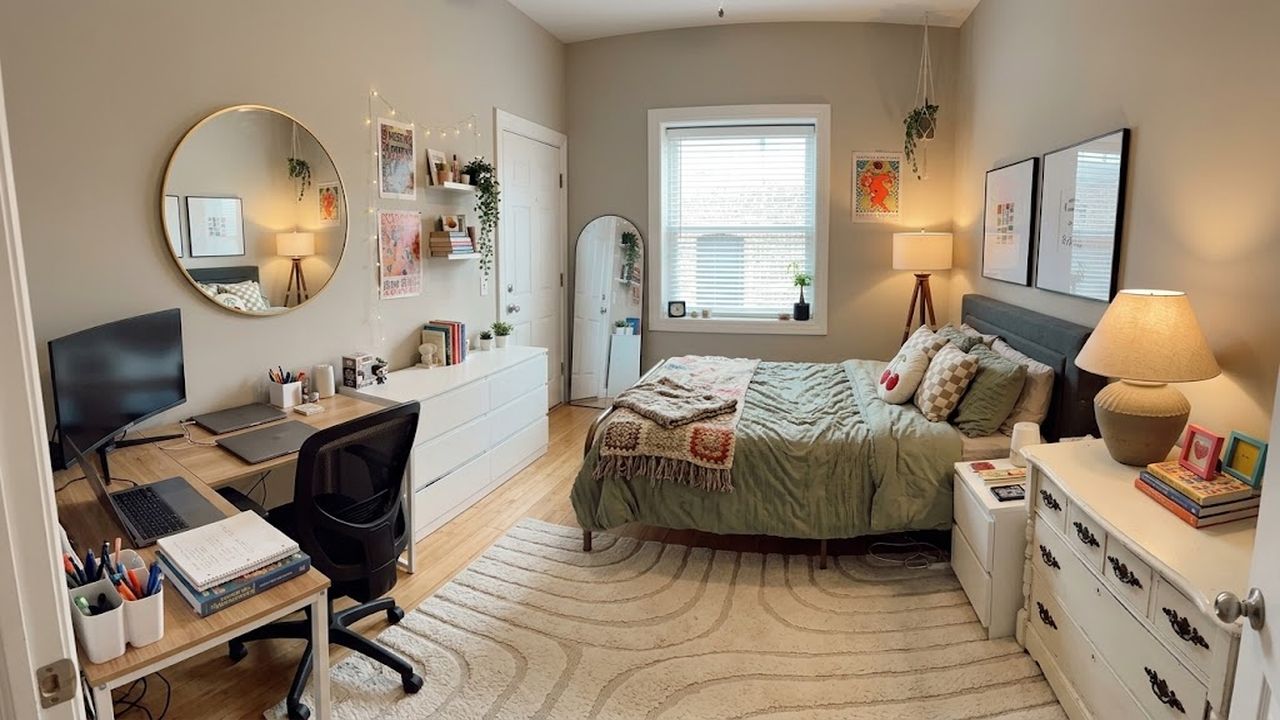
You walked in on move-in day and saw it. Bare beige walls, a harsh overhead light, and the hollow echo of a room that belongs to no one yet.
Your furniture is shoved against the walls, your boxes are still taped shut. And the whole place feels more like a waiting room than somewhere you actually want to live.
Here’s the good news. You do not need a big budget, a landlord’s blessing, or a design degree to fix that.
Most of the best college apartment decorating moves cost under $50. Leave zero damage, and take an afternoon at most.
The key is knowing what you are actually allowed to do before you start, and then working through one room at a time with a plan.
This guide covers every room in your apartment, from the living room to the bathroom, with practical ideas that protect your security deposit and fit a student budget.
Start wherever the space bothers you most.
Before You Start: What Your Lease Actually Allows
Loading scenario…
The single biggest mistake students make before they unpack is skipping the lease.
Nobody blames you. It is a 20-page document full of legal language, and you signed it under time pressure.
But buried in that document are a handful of rules that directly affect how you can decorate, and knowing them upfront saves you from losing your deposit on the way out.
Here are the five restrictions that show up most often in college rental leases:
- No painting without written landlord approval, even if you plan to paint back to white before you leave
- No drilling into tile, which rules out wall anchors in the bathroom and kitchen without permission
- No alterations to light fixtures or plumbing, meaning you cannot swap out a ceiling fan or replace a faucet on your own
- Limits on wall anchors, especially in drywall. Large or numerous nail holes can cross the line from normal wear into actual damage
- No permanent alterations, which covers anything that changes the structure of the apartment
That last point is where students get into trouble. There is an important legal difference between normal wear and tear and actual damage.
Scuff marks on a wall, a few small nail holes, and minor carpet impressions from furniture are almost always considered normal wear.
A collection of 40 nail holes, a cracked tile, or paint you applied without permission is actual damage, and your landlord can charge you for it.
The golden rule for renters
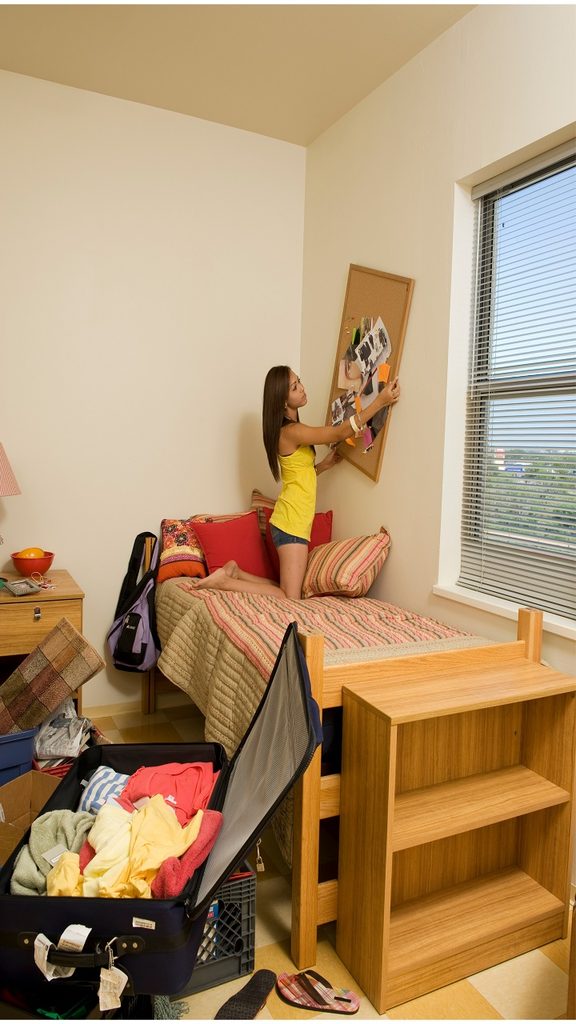
If you can return a surface to its original condition without a visible trace, it is almost always safe.
That is the logic behind three damage-free tools worth knowing before you buy anything else. Adhesive picture-hanging strips hold frames and lightweight shelves without drilling.
Removable peel-and-stick wallpaper covers entire walls and peels off cleanly. Peel-and-stick tiles can transform a backsplash without touching the original surface.
Before you hang or install anything, do the move-in photo checklist first. Walk every room on day one with your phone and photograph every existing scuff, stain, and hole you find.
Email the photos to yourself so they are timestamped. This documentation is your protection if a landlord tries to charge you for damage that was already there.
And if you want to do something the lease seems unclear about, send your landlord a quick text and ask. Written permission protects both of you.
Living Room: Make the Biggest Room Feel Like Yours
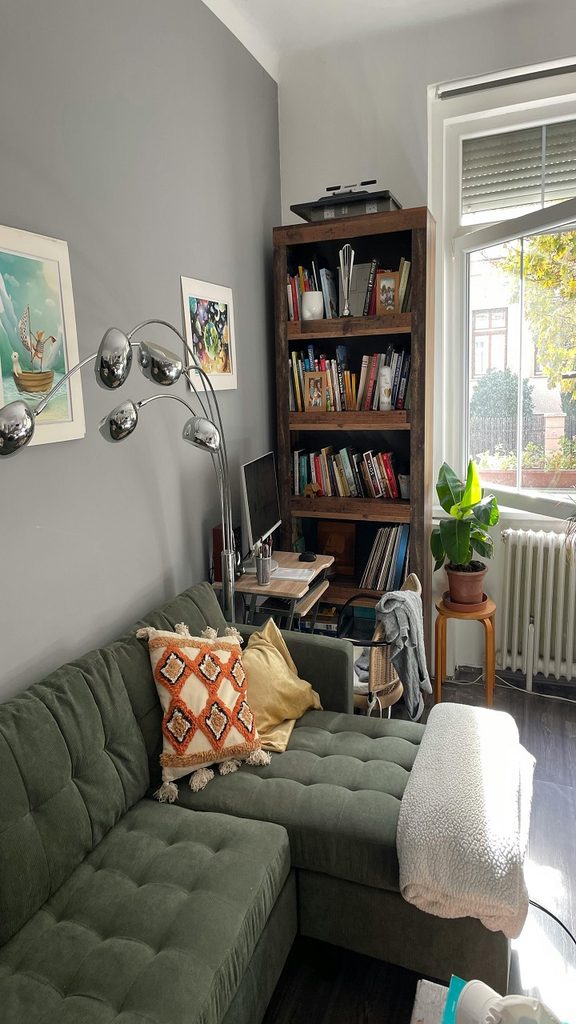
Most students walk into their first apartment and immediately think about the sofa.
Start with the rug instead. A well-chosen area rug is the single highest-impact move you can make in a rental living room.
It defines zones, adds warmth, covers ugly flooring, and instantly makes mismatched hand-me-down furniture look like it belongs together. The sofa just sits there. The rug ties the whole room together.
Start with an Area Rug (It Changes Everything)
Before you buy any rug, run through this quick check:
- Rug size: In most living rooms, the rug should be large enough for the front legs of all main seating pieces to rest on it. A rug that is too small floats in the center of the room and makes the space feel smaller, not larger.
- Color tone: Neutral tones (jute, oatmeal, warm gray) work with almost any future furniture. A bold pattern limits your options as you add pieces over time.
- Material: Jute and cotton rugs are affordable, durable, and easy to clean, which matters when you are living with roommates.
Rug Matchmaker
Before you buy, run your potential rug through the Ultimate Roommate Check. Will it anchor the room, or cause a design disaster?
Size Check 📏
In your living room, will the rug be large enough for the front legs of all main seating pieces to rest on it?
Color Tone Check 🎨
What is the dominant color or pattern of the rug?
Material Check 🧶
What material is the rug primarily made of?
Your Results
Jute rugs in particular have a natural texture that adds visual warmth even when everything else in the room is basic rental beige.
They photograph well, they hold up, and they usually cost less than $80 for a size that works in a standard living room.
Wall Decor Without a Single Nail
A blank white wall is not a problem.
It is a canvas. Large-format leaning art (a framed print or canvas propped against the wall rather than hung on it) makes an immediate statement and moves with you at the end of the lease.
Removable wallpaper panels used on a single accent wall can transform a living room in an afternoon and peel off cleanly when you move out.
Most apartment leases do allow renters to hang lightweight items on walls, but they restrict physical alterations, painting, and permanent structural changes.
If you want to be specific about what your lease permits for wall-mounted items, this overview of common decorating restrictions in apartment leases gives a useful breakdown of what landlords typically allow and where the limits usually fall.
Adhesive picture-hanging strips work reliably for frames up to a few pounds. For heavier pieces, lean them rather than hang them, or choose a piece light enough to qualify for the strips. Either way, you get the visual effect without the risk.
For rooms shared with roommates, check out these living room ideas for college roommates that are designed specifically for small shared spaces.
The key is agreeing on anchor pieces everyone can tolerate rather than trying to merge two completely different personal styles into one coherent room.
Lighting Does More Work Than Furniture
Lighting Over Furniture
A simple, renter-friendly approach to transforming a space from an institutional waiting area into a cozy home.
Layered Light
Combine floor, table, and pendant lamps to gain total control over your room’s ambiance rather than relying on flat overheads.
Warm Bulb Temperatures
Swap out institutional fluorescents for warm bulbs in the 2700K range to instantly make the living room feel cozy in the evening.
100% Renter-Safe
Adding lamps and utilizing simple adhesive hooks for lightweight pendants requires absolutely zero landlord approval.
Budget-Friendly Fix
Swapping the bulb in your existing overhead fixture is usually allowed, universally easy, and generally costs less than $5.
Most rental living rooms come with one flat overhead fixture that makes the space feel like a waiting area.
The fix is simple and entirely renter-safe: add lamps.
A floor lamp in the corner, a table lamp on a side table, and a plug-in pendant hung from a ceiling hook (adhesive hooks work for lightweight pendant shades) give you layered light you can actually control.
Warm bulbs in the 2700K range make a room feel cozy in the evening.
Overhead fluorescents make everything look institutional. Swapping the bulb in your existing overhead fixture is usually allowed and costs less than $5. Adding lamps does not require any landlord approval at all.
For more ideas on making the space feel personal without paint, these rental-friendly living room decor ideas go deeper on the no-paint approach that works best in most standard apartments.
Bedroom: Sleep Well, Study Better
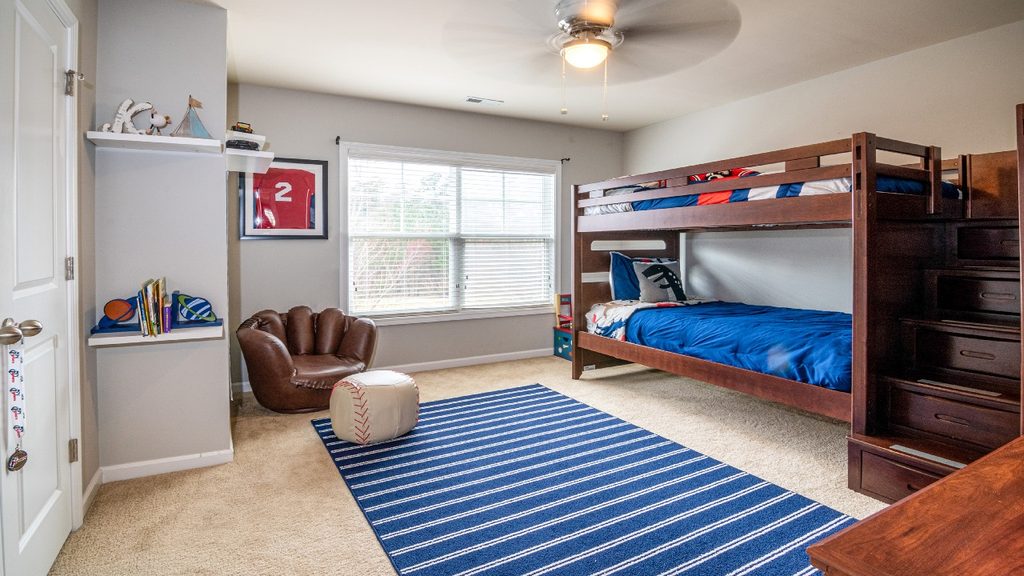
Your rental bedroom has two jobs: help you sleep and help you study. Most rental bedrooms fail at both.
There is one flat overhead fixture that is too bright for winding down and not directed enough for focused work.
There is usually no storage, minimal closet space, and four identical beige walls. The good news is that this room also has the most potential, and the changes that matter most here do not cost much.
The Wall Above Your Bed: Your Biggest Design Opportunity
The wall above your bed is the visual focal point of the entire room.
It is the first thing you see when you walk in and the last thing you look at before you fall asleep.
It deserves your full attention, and it offers the most decorating flexibility of any surface in the apartment.
You have options that require no hardware at all.
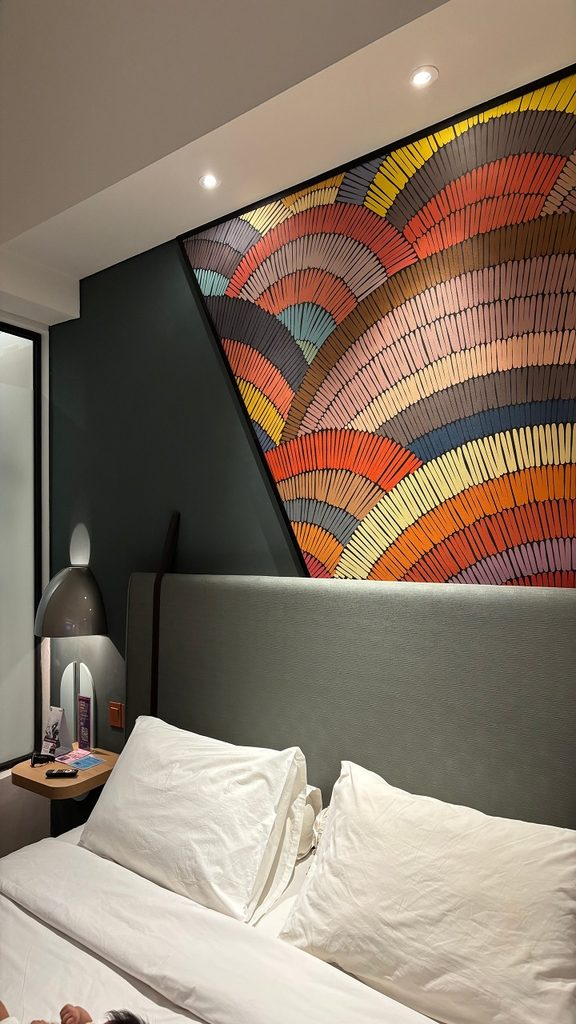
A large canvas leaned against the headboard, a tapestry hung using a tension rod between two walls, or a cluster of small frames arranged on adhesive strips all work without drilling.
A floating shelf mounted on heavy-duty adhesive strips can hold a small plant, a lamp. And a few books, and creates the kind of intentional moment that makes a room feel designed rather than thrown together.
If you want to see a full range of options for this space, this collection of college apartment bedroom decor ideas covers layouts for small rooms with real-world photos.
For a focused look at this specific wall alone, this guide to above-the-bed wall decor for renters walks through 11 different no-damage approaches, from gallery walls on strips to curtain canopy frames that attach to the ceiling without permanent hardware.
One of the most useful decisions you can make early in a bedroom is choosing a two-color palette for your textiles.
Pick any two colors.
Repeat them in your bedding, your throw blanket, your curtains, and one small accessory.
That single decision makes a room look intentional without spending more money. It is not about decorating rules. It is about visual cohesion, and it works because the eye reads repetition as a plan.
Lighting for Sleep and Study (They’re Not the Same Job)
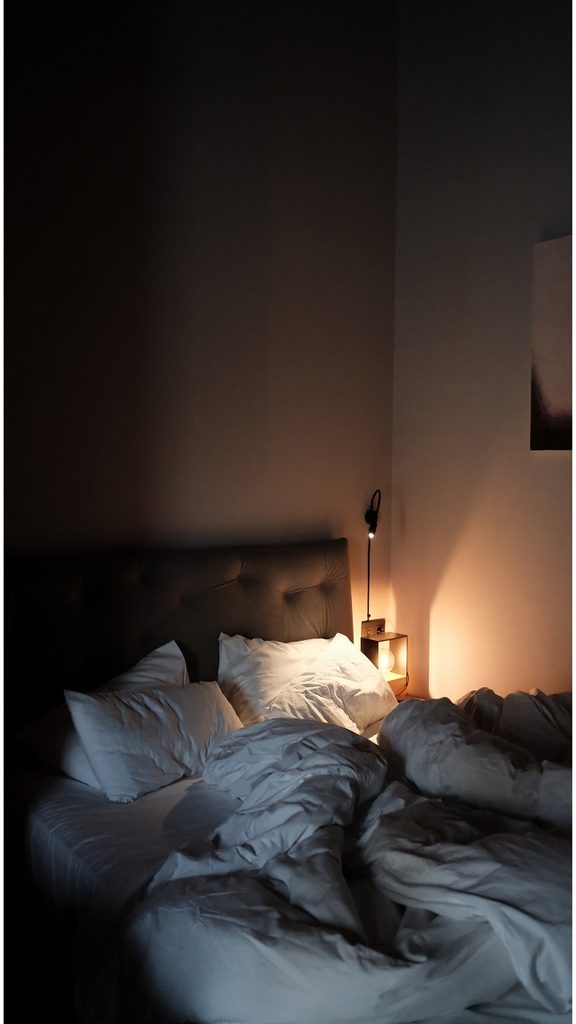
The overhead fixture in your rental bedroom is not designed for either sleeping or studying well.
Replace it in your routine, not literally. Add a warm-toned bedside lamp for winding down at night (a bulb in the 2700K range reads as soft, amber light) and a bright directed desk lamp for studying.
These are different tools for different jobs, and using the right one at the right time actually helps regulate your sleep cycle.
A desk lamp with a cool, bright bulb in the 4000K to 5000K range supports focus and mirrors natural daylight.
Switch to the warm bedside lamp about an hour before sleep. The swap takes two seconds and costs nothing once you have both lamps in place.
Storage and Layout in a Small Rental Bedroom
Deposit-Safe Upgrade Challenge
Reach 100% storage before your budget hits $0!
Positioning your desk near a window is one of the best free decisions you can make.
Natural morning light improves both mood and concentration, and studying near a window is consistently linked to better productivity.
If your desk is currently against an interior wall, try moving it before you buy anything else.
For storage, you do not need to drill into a single wall. Here are five deposit-safe bedroom upgrades, most under $50:
- Cube shelves (freestanding): Stack two units to build a wardrobe extension or a bedside bookshelf that moves with you
- Over-door organizers: Use the back of your closet door for shoes, accessories, or school supplies
- Under-bed risers: Lift your bed frame 6 to 8 inches to create storage space for bins and seasonal items
- A bed frame with built-in drawers: If you are buying a frame anyway, this solves the storage problem permanently
- A hanging closet organizer: Adds four to six shelves of vertical storage inside your existing closet with no tools required
According to a realistic budget for a college apartment in 2026, fully equipping a college apartment typically runs between $800 and $2,500, with a desk and mattress as the main cost drivers.
Storage pieces rank lower in cost but higher in daily impact, so it pays to solve the clutter problem early.
A bedroom that supports both sleep and studying makes everything else in college feel a little more manageable. That is worth the investment.
Kitchen: Small Space, Big Personality
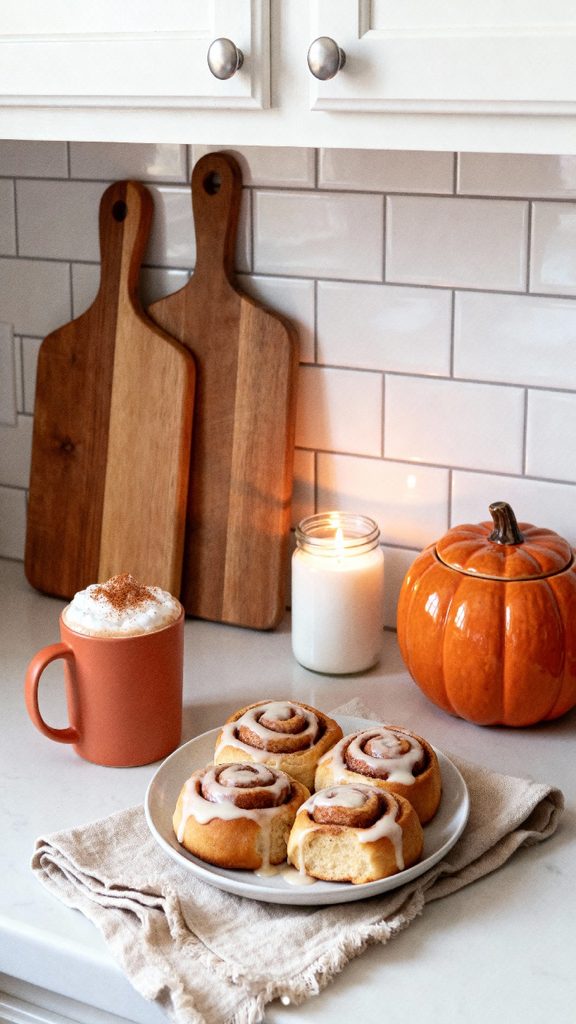
Most students ignore the kitchen entirely when they start decorating.
It feels too fixed, too functional, too permanent. B
ut the kitchen is also the fastest room to transform, and it usually takes less than an hour to go from builder-beige to a space that actually feels like yours.
What You Can Change Without Touching a Surface Permanently
Peel-and-stick backsplash tiles are the fastest upgrade in this room.
You apply them directly over the existing backsplash tile or painted wall. They come off cleanly without leaving residue or pulling paint, provided you follow one important rule.
Test on a hidden area first.
Find a small spot behind the refrigerator or under the cabinet lip, apply one tile, wait 24 hours, and check for adhesion and removal. This one step saves you from a problem on move-out day.
Contact paper works the same way on cabinet fronts and countertop surfaces. It gives you the ability to add pattern, color, or texture to surfaces that are otherwise impossible to change.
Avoid the permanent-adhesive varieties, which can pull paint on removal. Repositionable contact paper is the renter-safe version.
For a broader overview of what these materials can do, this guide to renter-safe surface updates covers how peel-and-stick wallpaper.
Plus, tile products install and remove without leaving marks, and which surfaces they work best on. The same principles that apply to a kitchen backsplash apply throughout the apartment.
These college apartment kitchen decor ideas give a full visual walkthrough of what renters have done with these exact methods in spaces similar to yours.
The Countertop and Cabinet Zone
Freestanding storage does more visual work than most students expect.
A small rolling cart next to the counter adds prep space, holds appliances, and moves out of the way when you need the floor.
A ladder shelf in the corner stores dry goods, cookbooks, and small plants without touching a single wall. Both pieces come with you when you leave.
The space above the cabinets is the most overlooked real estate in a rental kitchen.
Most students either leave it empty or stack boxes there. Fill it with baskets, dried botanicals, or trailing plants, and the kitchen immediately looks like someone thought about it.
A few trailing pothos plants on top of upper cabinets cost about $8 each, require almost no light or water, and make the room feel alive in a way that no accessory can replicate.
One last idea that costs almost nothing: coordinated small accessories. A matching kettle and toaster, a printed dish towel, a small cutting board with a wood handle. None of these individually transforms the space. Together, they read as a decision rather than an accident.
For kitchens with limited cabinet storage, these kitchen storage ideas for renters with no pantry are worth reading before you buy anything.
The best solutions here are all freestanding and portable.
Bathroom: Maximum Impact, Zero Damage
Bathroom Makeover
Maximum Impact, Zero Damage
The Swap-and-Remove Method
A new shower curtain completely changes the visual tone. Store every original piece (curtains, mirrors, fixtures) in a labeled box to guarantee your security deposit is safe upon move-out.
Storage Without Drilling
Solve shared counter space issues with vertical storage. Use over-door organizers, narrow freestanding shelf units, and bamboo trays to organize items without using a single drill bit.
5 Swaps Under $50
Transform the room affordably with high-impact swaps: a $35 curtain, $20 coordinated towels, an $8 humidity-loving plant, a $15 bamboo tray, and a $12 matching soap dispenser set.
The Easiest Room to Finish
Often skipped because it seems too fixed, the bathroom can actually be completely refreshed in a single afternoon. Crossing it off builds momentum for decorating the rest of the apartment.
The bathroom is the most skipped room in every first apartment.
Students assume it is too fixed, too small, and too much trouble.
In reality, it is the easiest room in the apartment to finish in a single afternoon, and the transformation is usually more dramatic than any other room.
The Swap-and-Remove Method
The shower curtain swap is the highest-impact move in any rental bathroom.
A new shower curtain costs $20 to $35, takes five minutes to hang, and completely changes the visual tone of the room.
Take down the original curtain and its rings, store them carefully, and re-hang them on move-out day. Nobody knows they were ever gone.
A statement mirror propped against the wall or hung on adhesive strips works the same way.
Most rental bathrooms have a basic builder mirror glued above the sink.
You cannot remove that one.
But you can add a second mirror elsewhere, or frame the existing one with peel-and-stick mirror trim tiles that come off cleanly.
Either approach shifts the room from generic to considered.
The practice of storing original fixtures is one of the most important habits renters can build.
It directly supports protecting your security deposit when you decorate, which depends on your ability to return the apartment to its original condition.
Shower curtains, curtain rings, the original soap dispenser, the bath mat that came with the unit: store every original piece in a labeled box in your hall closet.
Move-out day will go much smoother when you know exactly where everything is.
For a full set of sequenced ideas for this room, these rental bathroom makeover ideas walk through 14 specific approaches that require no renovation.
Storage Without Drilling
The $50 Bathroom Makeover
Select clean, renter-friendly upgrades. Keep the total under $50!
Shared bathrooms have one main problem: not enough counter space for two or three people’s things.
The solution is vertical storage, and all of it can be done without drilling.
An over-door organizer on the back of the bathroom door holds toiletries, a hair dryer. And, small products for two people without using a single inch of counter space.
A narrow freestanding shelf unit fits between the toilet and the wall in most standard bathrooms and holds towels, extra toilet paper, and small products.
A bamboo tray on the counter corrals the items that do stay out, makes the surface look organized even when it is not.
For roommate-specific bathroom storage, these bathroom storage ideas for renters sharing with roommates go deeper on dividing a small space fairly between multiple people.
Here are five bathroom swaps that cost under $50 total and come down clean at move-out:
- New shower curtain and rings: Instant color and pattern for $20 to $35
- Coordinated towels: Two matching towels replace the mismatched assortment for under $20
- Small potted plant: A snake plant or pothos thrives in humidity and costs about $8
- Bamboo tray: Corrals counter items and adds a natural texture for under $15
- Matching soap dispenser and toothbrush holder set: Two pieces that read as intentional for about $12
The bathroom is the easiest room to finish. Crossing it off the list builds momentum for everything else.
Budget Tips: Decorating After You’ve Already Paid the Deposit
After the deposit, first month’s rent, and moving costs, most students have almost nothing left.
That is not a problem to solve before you start. It is a reality to decorate around. The key is layering gradually rather than trying to do the whole apartment at once.
Start with your bedroom.
Sleep and study quality affect your grades, your health, and your mood every single day.
Getting that room functional and comfortable first is not indulgent. It is strategic. Then move to the living room, where guests see and where you spend the most social time.
Kitchen and bathroom can follow because they already have built-in function and require less to feel finished.
Where to find affordable pieces:
- Thrift stores: The best source for rugs, lamps, art, and furniture. Pieces show up unpredictably, so check weekly.
- Facebook Marketplace: Sofas, bed frames, shelving, and dressers at a fraction of retail. Cash deals move fast, but the savings are real.
- IKEA: Reliable for basics, especially storage pieces, desk setups, and lighting. Not the most exciting source, but consistent quality at predictable prices.
- Target seasonal sections: Especially strong for textiles, small accessories, and low-cost art at the start of each semester.
- Parent hand-me-downs: Bedding, towels, extra dishes, a spare lamp. Most parents have a box of extras they are glad to send with you. Ask before you buy.
Buy one good thing
The "Buy One Good Thing" Principle
Quality Over Quantity
A single well-chosen lamp or one quality rug does more for a room than ten cheap accents bought in a panic.
Prioritize the Basics
Always budget for one real piece per room before you attempt to fill in the smaller, post-deposit details.
Protect Your Walls
Utilize specific, practical approaches with damage-free options that work safely in any room or layout.
The Gradual Timeline
Gradual is fine. Most apartments take a full semester to feel finished, and that is exactly how it is supposed to go.
The most useful financial rule for first-time renters is the buy one good thing principle.
One quality rug, a single well-chosen lamp, or a solid curtain panel does more for a room than ten cheap accents bought in a panic.
Budget for one real piece per room before you fill in the details. You will thank yourself later.
For a prioritized list of what to buy first and in what order, these first apartment decorating ideas on a budget cover the post-deposit reality with 12 specific, practical approaches.
And if you want to stay focused on walls specifically, these college apartment wall decor ideas give you 10 damage-free options that work in any room.
Gradual is fine. Most apartments take a full semester to feel finished, and that is exactly how it is supposed to go.
