What this is: 15 storage ideas built specifically for renters splitting one small bathroom with roommates, not a solo renter’s storage list with “roommates” tacked on.
Who it’s for: Renters sharing a bathroom with one or more roommates, where the real problem isn’t square footage — it’s whose stuff is whose.
Why read it: This targets the actual source of shared-bathroom chaos, not just another round of baskets and shelves.
If four people use one sink, the problem is rarely just that the bathroom is tiny. It is that every bottle, towel, drawer, and mysterious hair tie has entered a custody battle.
Most small bathroom storage ideas are written for one person. Add roommates and a perfectly decent basket system can still feel chaotic because nobody knows what belongs to whom, what is shared, or who finished the toothpaste and quietly returned the empty tube.
The fix is not squeezing in fifteen more organizers. It is creating clear ownership, visible zones, and a few sensible shared rules.
These ideas do exactly that, with renter-friendly setups that do not require turning your security deposit into a donation. If the room itself needs help too, start with these renter-safe ways to upgrade a boring bathroom.
Start With the Real Problem: Ambiguity, Not Space
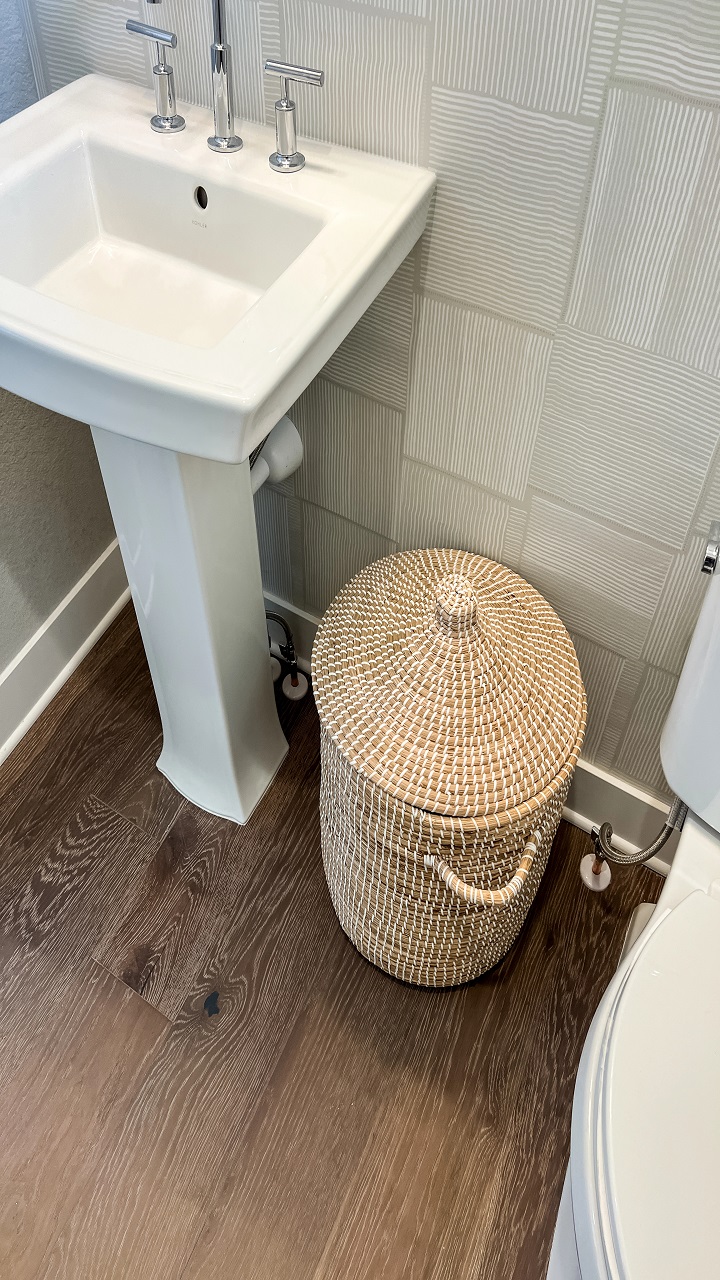
Before buying anything, it’s worth naming what actually causes shared-bathroom friction, because it’s rarely what people think.
In a place you live alone, you know instinctively what belongs to whom. Sharing space with someone you don’t know that well removes all of that instinct, and ambiguity is exactly where the friction starts.
Every idea on this list is really a version of the same fix: turning an assumption into something visible.
Give Every Roommate a Personal Shower Caddy
One caddy per person.
Full stop.
Shared bottles sound efficient until someone uses the last conditioner, a razor goes wandering, and three half-empty body washes become permanent shower decor.
Personal caddies make ownership obvious and let each person carry products back to a bedroom if the bathroom has no safe storage.
That is especially useful in dorm- or suite-style setups, where portable bathroom storage matters more than a pretty countertop arrangement.
RELATED: 30 Apartment Bathroom Ideas That Look Expensive (Even If Your Landlord Won’t Let You Touch the Tile)!
Label the System Before Habits Set In
Do this during the first couple of days, not three months later when everyone already has a strongly held opinion about “their” corner. Put names or color labels on caddies, drawer sections, bins, and shelf edges.
A label is not bossy; it is a tiny argument-prevention device. This dorm-essentials setup guide is a useful reminder to organize shared spaces early, before move-in clutter develops its own constitution.
Choose a Caddy That Can Actually Drain
A solid-bottom caddy can turn into a shallow indoor pond. Look for mesh or sturdy plastic with real drainage holes, a handle that will not collapse under full-size bottles, and enough open space for air to circulate.
The practical shower-caddy advice here covers drainage, hanging options, and toothbrush storage. Whichever style you choose, empty it and rinse it regularly. “Mildew chic” is not the bathroom aesthetic we are chasing.
RELATED: 14 Rental Bathroom Makeover Ideas (No Reno Required)!
Hang Caddies Instead of Parking Them on the Shower Floor
Shared shower floors collect standing water, hair, and soap scum at impressive speed. Add a rust-resistant S-hook or carabiner to each caddy so it can hang from a sturdy shower rod or approved hook while in use.
Check that the rod is secure and do not overload it with every bottle anyone has owned since 2022. The goal is less floor clutter, not an accidental shampoo avalanche.
Color-Code Towels, Washcloths, and Hooks
This is the missing piece in many shared bathrooms. Give each roommate a color and repeat it across towels, washcloths, labels, and removable hooks. It works even when everyone is half-awake and nobody wants to read tiny name stickers.
Choose washable towels in clearly different shades, then place hooks far enough apart for them to dry.
Color becomes a visual shortcut for ownership—and suddenly the damp towel on the floor has a known next of kin.
Decide What Is Shared—and What Definitely Is Not
Agree once on the genuinely communal items: hand soap, toilet paper, the bath mat, trash bags, and basic cleaning supplies. Split the cost, pick a refill plan, and move on with your lives.
Keep toothbrushes, razors, skincare, medications, and specialty hair products personal. Clear boundaries prevent duplicate bulky purchases without making every object in the room a group project.
RELATED: 17 Peel-and-Stick Backsplash Ideas for Rental Bathrooms!
Add a Narrow Rolling Cart—If It Truly Fits
A slim cart can turn a six-inch gap into three levels of useful storage. Assign one tier per roommate, or reserve the bottom tier for shared supplies. Wheels also make it easy to pull the cart out for cleaning.
Measure the floor gap, door swing, and walking path before buying. A cart is a smart small-space toiletry solution only when it does not create a daily obstacle course.
Use an Over-the-Door Organizer for Backup Supplies
Extra shampoo, unopened toothpaste, toilet paper, and cleaning refills do not deserve prime counter space. A washable pocket organizer on the bathroom door—or the nearest closet door—keeps backup stock visible without drilling.
Before ordering, measure the door thickness and clearance. If over-door hooks stop the door from closing, use a lightweight fabric organizer on removable hooks rated for that surface instead.
Claim Vertical Space Before Adding More Furniture
When the floor is already busy, look up. A tension-pole caddy, narrow ladder shelf, door organizer, or landlord-approved removable basket can add storage without stealing elbow room.
Keep the heaviest bottles low and everyday items between waist and eye level. High shelves are better for light backup stock, not the giant value-size shampoo bottle waiting to make a dramatic entrance.
Divide Drawers With Something Physical
A verbal agreement lasts until the first rushed morning. Adjustable dividers or small open trays turn one vague drawer into clear zones that stay clear.
Give each person the same amount of usable space where possible, then label the front edge. Avoid deep lidded boxes for daily items; if opening the organizer feels like a chore, the counter will win by Tuesday.
Keep a Zippered Pouch for Items That Travel
Razors, tweezers, menstrual products, medications, and small beauty tools do not all need permanent bathroom real estate. A wipe-clean zip pouch keeps personal items together when they move between the bathroom and bedroom.
This also protects small or private items from being mistaken for communal supplies. Choose a pouch that opens wide, dries easily, and fits inside your caddy instead of becoming one more loose thing on the sink.
Use Removable Hooks and Caddies Carefully
Adhesive storage can be renter-friendly, but humidity, textured walls, grout, and peeling paint are not ideal partners. Follow the product’s surface and weight instructions, clean the area properly, and let the adhesive cure before loading it.
Use removable hooks for light items such as washcloths, empty caddies, or a small pouch—not glass jars or a shelf full of heavy bottles. Test an inconspicuous spot first, and never stick adhesive over damaged paint.
Add a Freestanding Over-the-Toilet Unit
The space above the toilet can hold a surprising amount without drilling. Choose a freestanding unit with adjustable feet, enough clearance for the lid and flush control, and anti-tip support that your lease allows.
Assign a shelf or basket to each roommate and store toothbrushes in closed or covered containers. Keep toilet paper and light backup items higher; heavy glass containers do not belong above anyone’s head—or above the toilet tank.
Store Toothbrushes Upright, Covered, and Able to Dry
In a crowded bathroom, toothbrushes should not touch, sit beside the toilet uncovered, or stay sealed while dripping wet. Use ventilated covers and separate upright holders, rinse them regularly, and close the toilet lid before flushing when there is one.
It is a small habit, yes. It is also much easier than thinking too deeply about what travels around a shared bathroom. Some mysteries are better prevented than investigated.
Know When to Buy a Second One
Not every roommate problem needs a clever organizer. If two people use the same inexpensive brush, hair-tool mat, shower squeegee, or daily item at the same time, buying another may be the simplest solution.
Storage is meant to reduce friction, not turn the household into a tiny logistics company. Sometimes the smartest shared-bathroom system is admitting that one item was never going to work for three people.
A Shared Bathroom That Actually Works
The best shared bathroom organization is not the one with the most bins. It is the one where everyone can see what is theirs, what is shared, and where it goes.
Start with personal caddies, labels, divided zones, and a short shared-supplies list. Add vertical storage only where it genuinely fits. Set the system up in the first week, and the bathroom can stay small without feeling like a daily negotiation.
