
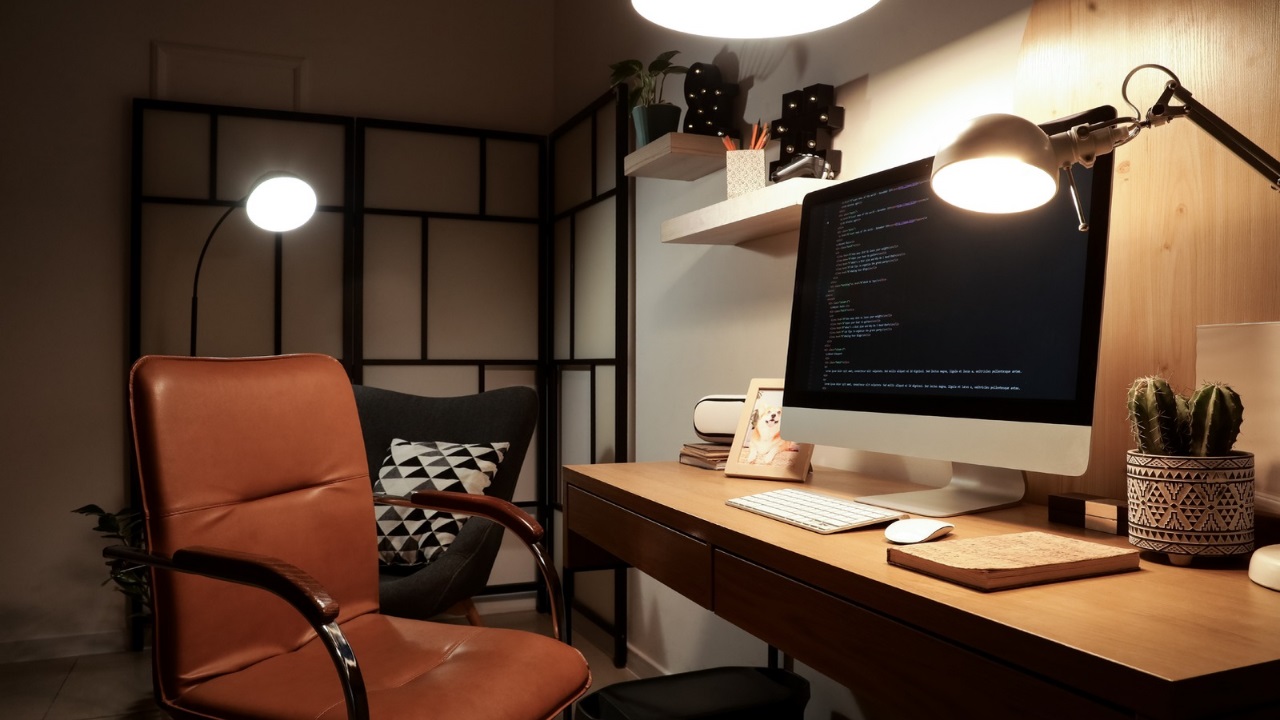
What this is: Seven real-room ideas that show you how to build a desk setup in your rental living room so it disappears once the workday ends.
Who it’s for: Remote-working renters who need a functional workspace that doesn’t take over their living space at the end of the day.
Why read it: Each idea is grounded in a real room, with practical steps you can follow in your own rental space.
In This Article
- 1. A Floating Window Desk Built Into the Media Wall
- 2. A Desk Nook Tucked Into a TV and Bookshelf Wall
- 3. A Corner Desk That Carves Out a Dedicated Work Zone
- 4. A Floating Desk That Extends Right Off the TV Wall
- 5. A Desk Built Into the Back of the Sofa
- 6. A Narrow Room Split Into a Work Side and a Soft Lounge Side
- 7. A Wood Slat Panel That Turns Any Wall Spot Into a Desk Zone
- Questions and Answers
You love working from home. You hate that your living room now looks like a cubicle.
When your desk, monitor, and cable clutter sit out in the open every single evening after work, it’s hard to actually switch off.
And if you’re renting, you can’t knock down walls or install a built-in home office to fix it. The good news? You really don’t have to.
Plenty of renters have already figured out smart, creative ways to keep a full workspace without letting it take over their entire home.
I’ve put together seven real ideas that show you exactly how to do it — no drilling, no permanent changes, no damage to your walls at all, and no compromise on your space.
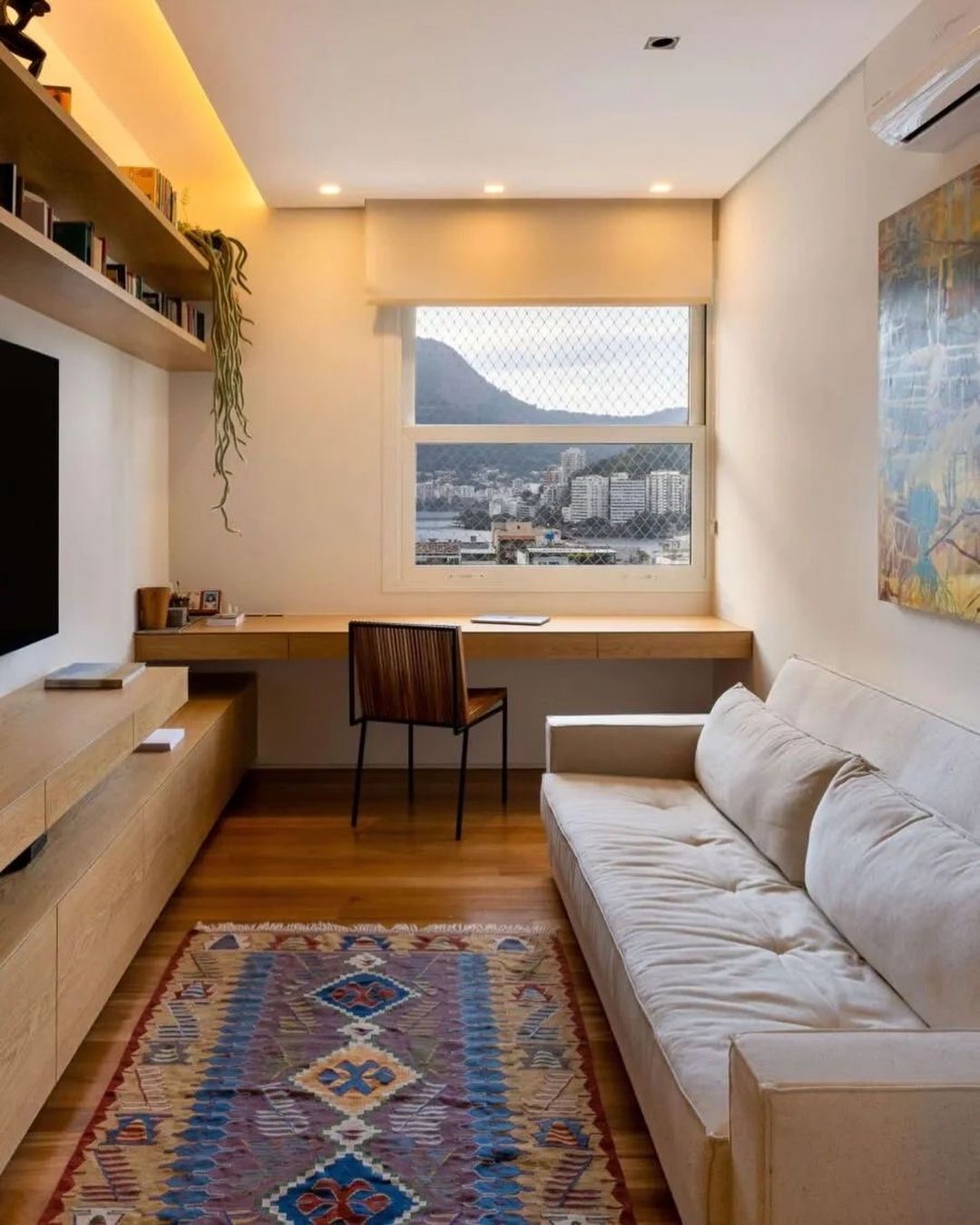
1. A Floating Window Desk Built Into the Media Wall
Source: INSTAGRAM.
The desk here runs straight along the wall under the window, sitting at the same height. And depth as the TV media unit beside it.
That’s the trick. Because everything is the same warm wood tone and flows in one continuous line, your eye reads it as a single piece of furniture. Not a desk awkwardly added to a living room.
The slim floating shelf above holds books and trailing plants, with soft LED strip lighting tucked against the ceiling. That warm glow makes the whole wall feel intentional, not functional.
After work, you push the chair in, close your laptop, and the space looks like a stylish reading nook. No visible desk legs, no separate “office corner”. Just a room that happens to have a great spot to sit and work.
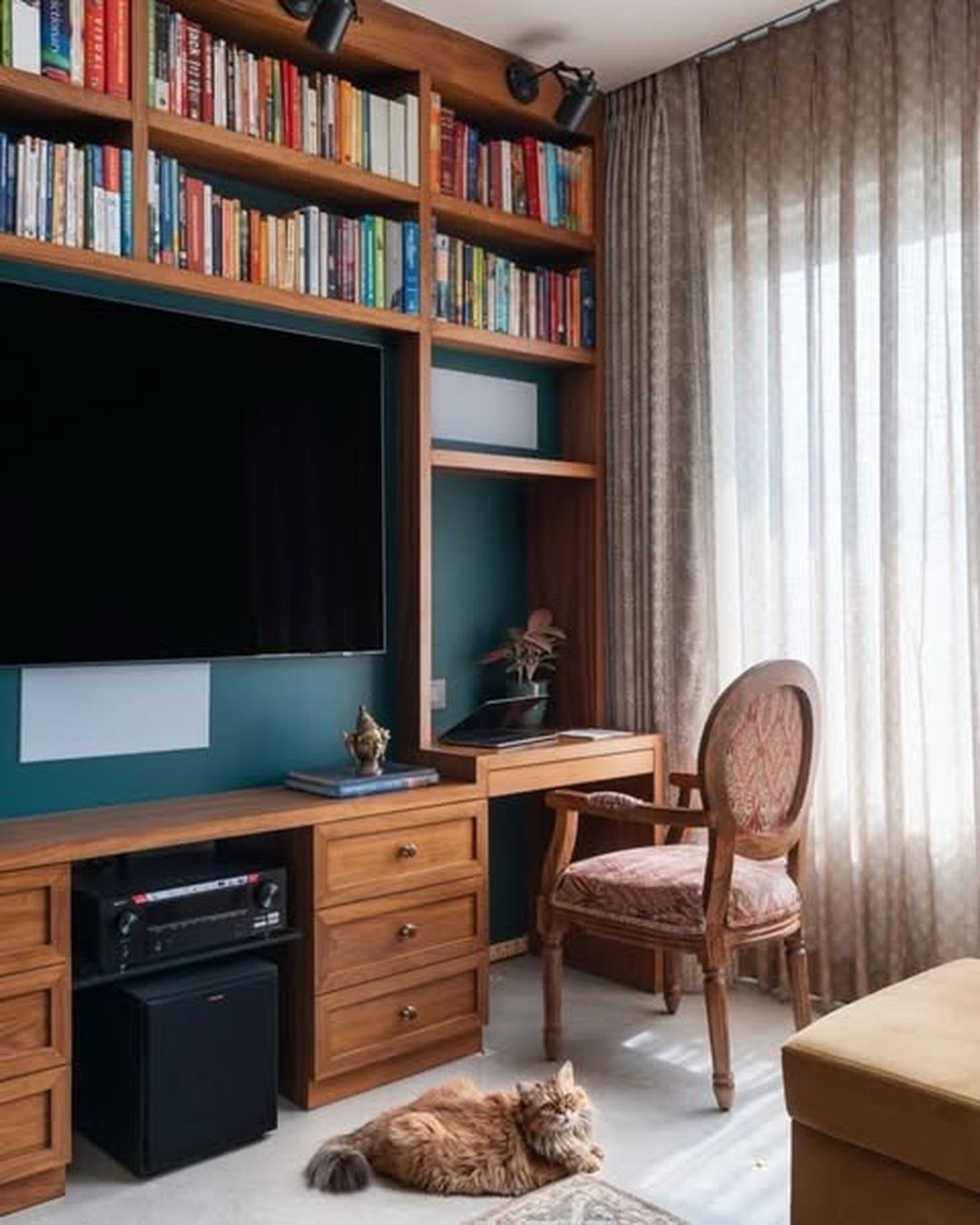
2. A Desk Nook Tucked Into a TV and Bookshelf Wall
Source: INSTAGRAM.
The desk is built right into the shelving unit. Same wood, same frame, same wall.
You’d walk past it and not clock it as a home office setup in a small rental space at all. Pull the chair out and you’re set. Push it back in, close the laptop, and it blends straight back into the books.
The teal back panel pulls the whole nook together. That bold color makes it look intentional, not functional. Add a small plant and one decorative piece.
A thrifted object or small sculpture works well on the desk surface. Your eye reads the whole corner as a library moment, not a home office.
Related Guide: 7 Japandi Rental Living Room Ideas for a Calm, Curated Look Without Permanent Changes
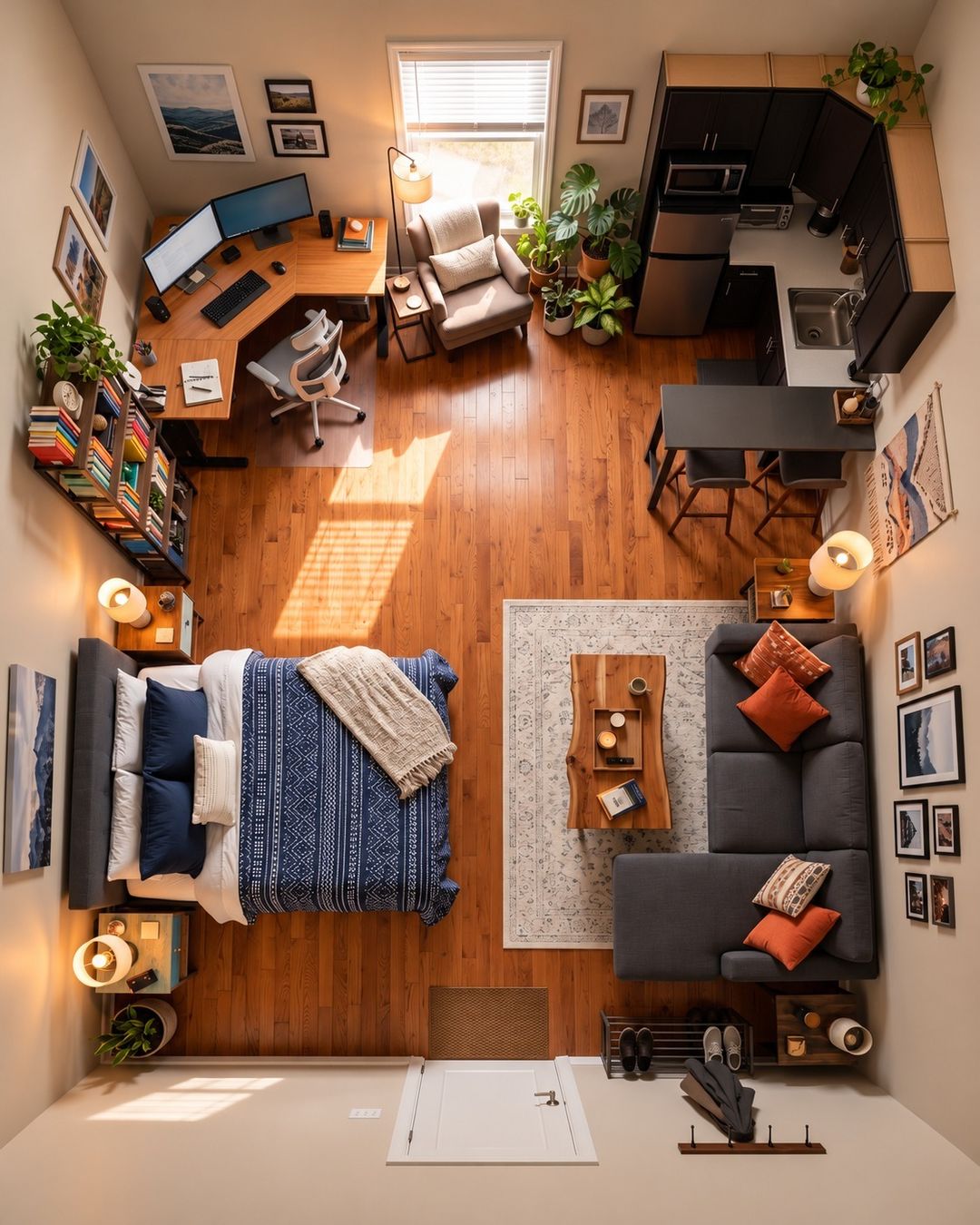
3. A Corner Desk That Carves Out a Dedicated Work Zone
Source: INSTAGRAM.
The desk lives tucked into the far corner, completely out of the main sightline.
That one placement change makes a real difference. When you’re on the sofa, the dual monitors aren’t facing you at all.
Durham University found that remote workers without clear workspace boundaries report worse wellbeing and productivity — and placing your desk out of the living area’s sightline is exactly that kind of boundary.
A reading chair and floor lamp between the desk and sofa create a natural buffer zone. Indoor plants reinforce that divide.
They pull your eye toward the living area and away from the screens. It ends up feeling like two completely separate rooms in one space.
Related Guide: 7 Small Living Room Ideas Built for Renters Who Want a Real Home, Not a Temporary Space
4. A Floating Desk That Extends Right Off the TV Wall
Source: INSTAGRAM.
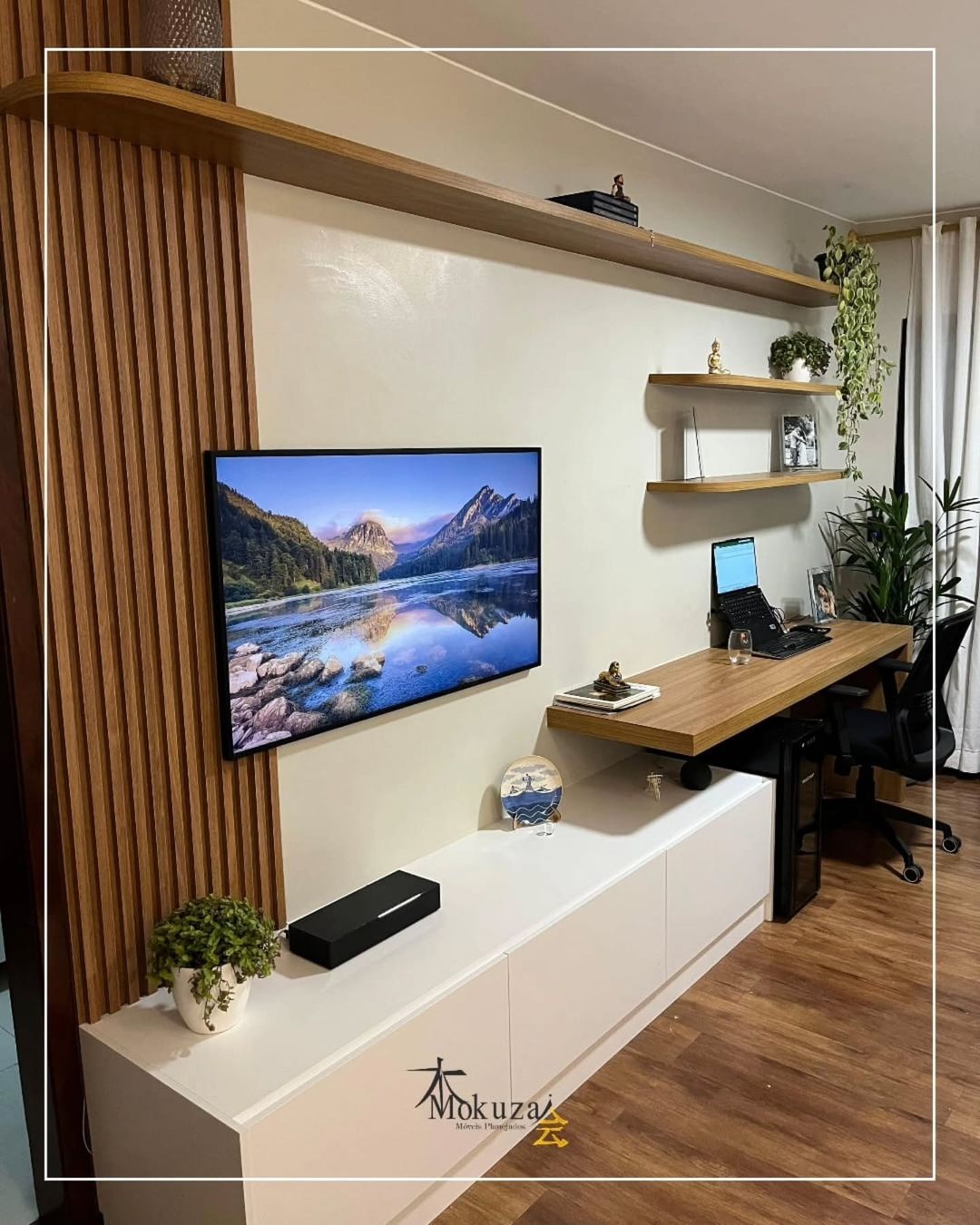
The desk runs straight off the TV wall, using the same warm wood tone as the shelves above.
Same material, same finish, same level. Your eye reads the whole thing as one continuous unit. That calm, pulled-together feel is exactly what makes a living room look curated rather than cobbled together.
The white credenza below stretches the full length, tying the desk side to the TV side. That continuous base line is what makes it work.
Add trailing plants on the upper shelves for a calmer, Japandi-style finish that pulls the eye away from the laptop.
Related Guide: 10 Mid-Century Modern Rental Living Room Ideas That Look Curated, Not Thrown Together
5. A Desk Built Into the Back of the Sofa
Source: INSTAGRAM.
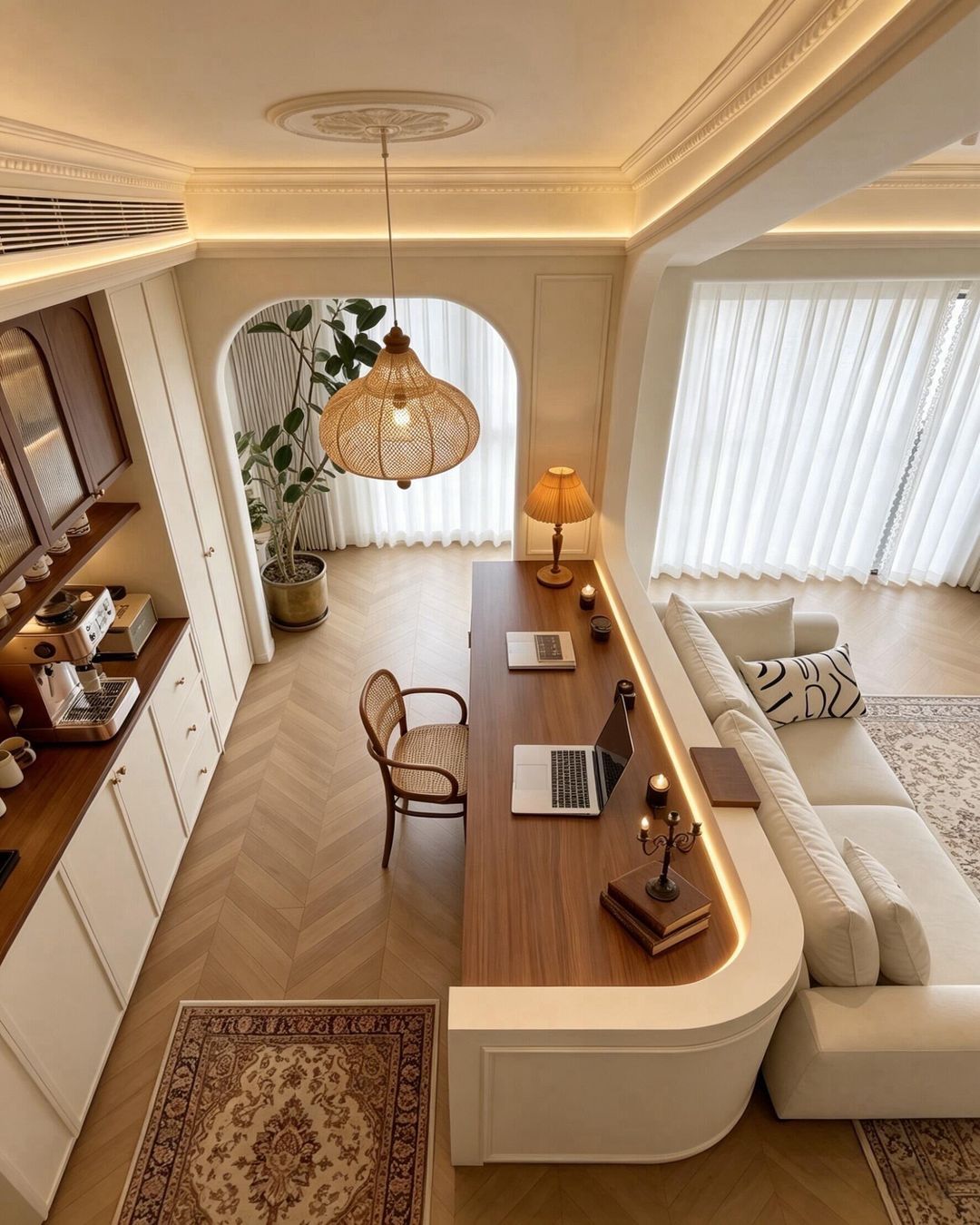
The long desk runs flush along the back of the sofa as one single piece. That’s not a separate desk pushed against the couch. It’s a built-in surface that doubles as a console table when you’re done for the day.
Two laptops fit on it side by side. When work ends, close them and place a lamp, some books, and a candle holder on top. The LED strip along the base ties everything together. Warm, ambient light that reads as pure decor.
Related Guide: 7 Quiet Luxury Ideas That Prove Your Rental Doesn’t Have to Look Like a Rental
6. A Narrow Room Split Into a Work Side and a Soft Lounge Side
Source: INSTAGRAM.
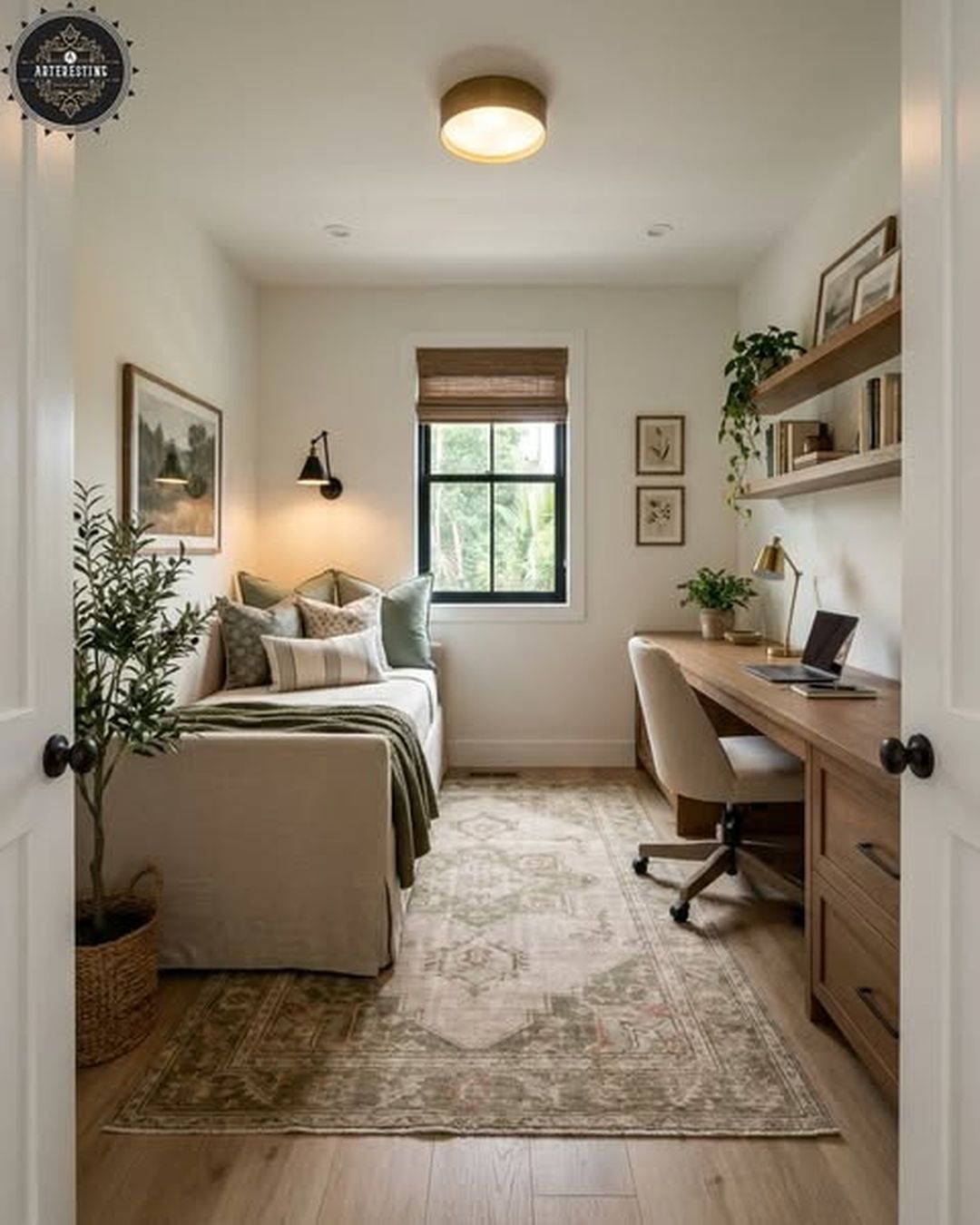
The room is divided straight down the middle. Sofa and sconce on the left. Desk and shelves on the right.
Both sides use the same warm wood tones and neutral palette, so it reads as one room, not two functions fighting each other.
The vintage runner rug down the center is what holds the whole thing together. It guides the eye from one end to the other.
When work ends, you just spin your chair around and face the sofa side.
Related Guide: 11 Small Rental Living Room Ideas for Farmhouse Charm Without Shiplap or Permanent Changes
7. A Wood Slat Panel That Turns Any Wall Spot Into a Desk Zone
Source: INSTAGRAM.
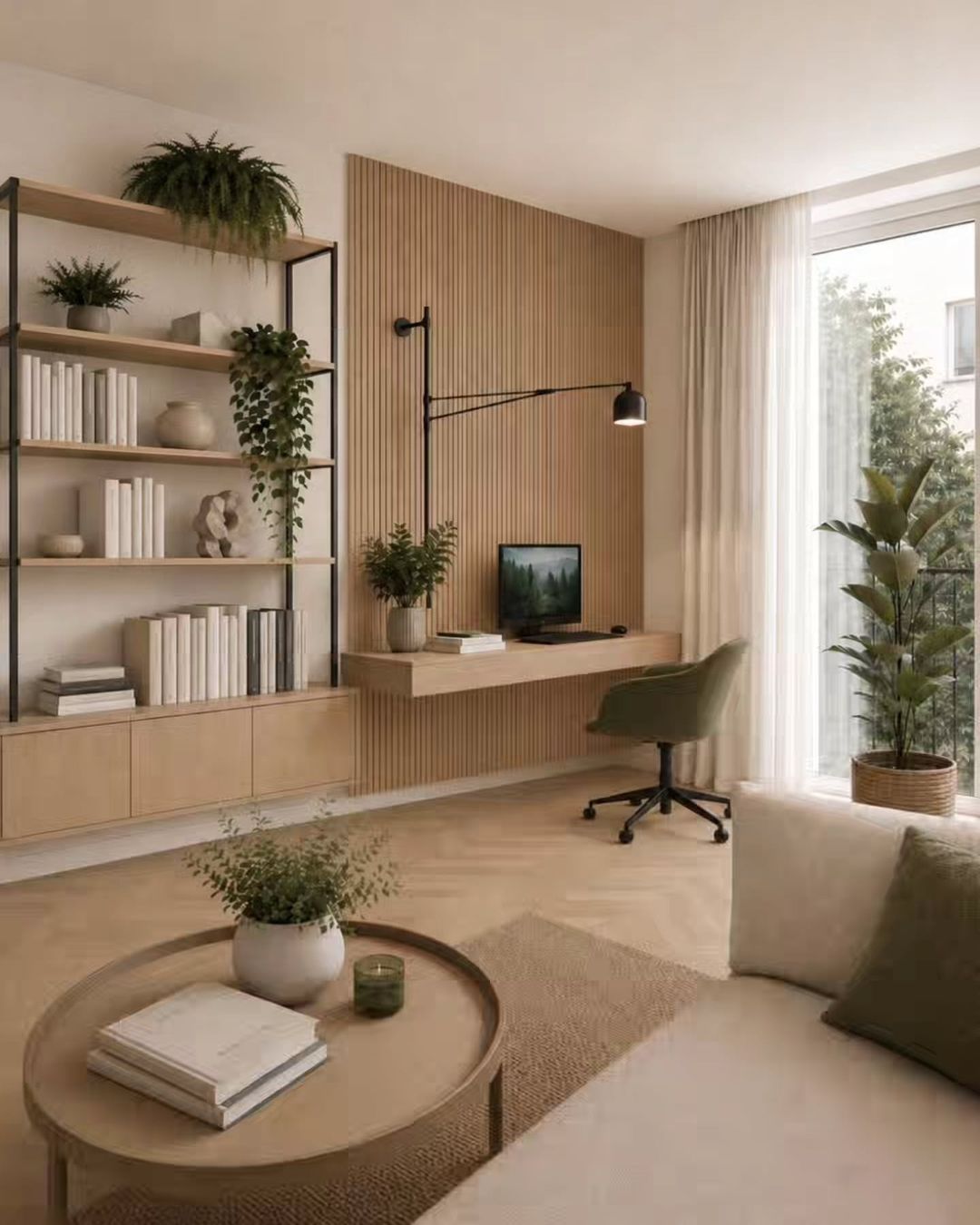
The slatted wood panel behind the desk does the heavy lifting. It marks the work zone without building a single wall.
The floating desk sits flush against it, and the swing arm lamp mounts straight onto the panel. No separate furniture grouping, no awkward corner. Just a defined zone that reads as deliberate.
Roll the chair back into the living area after work and the panel just becomes a feature wall.
Pair it with an open shelving unit on the adjacent wall. The whole corner reads as a styled library nook, not a home office.
Related Guide: 9 Scandinavian Rental Living Room Ideas for an Airy Nordic Look Without Touching the Walls
Questions and Answers
How do I mentally switch off from work when my desk is still visible from the sofa?
Put everything away when you finish for the day. Close your laptop, stack your notes, push in the chair. According to Psychology Today, using physical cues to separate work from home life is linked to better productivity and work-life balance.
Does the chair type affect how well a desk blends into a living room?
Yes, a lot. Standard office chairs, especially tall ones with headrests, are the fastest way to make a desk read like a cubicle. Swap yours for a dining chair, an accent chair, or a compact task chair. It really shows.
Can I use any of these ideas if my landlord won’t let me drill into the walls?
Most of these work without drilling. Freestanding shelving units, leaning desks, and room dividers need no wall fixings. For slat panels and floating shelves, check with your landlord first — many allow small fixings if you restore the wall on leaving.
How do I stop cables making the whole setup look messy?
Cable management matters when your desk lives in a living room. Use a cable box or tray under the desk to group power strips. Velcro cable ties keep cords bundled along the desk leg or wall edge, out of sight.
Do I need a monitor, or can I just use my laptop on the desk?
A laptop works just fine. Using a laptop stand and an external keyboard raises the screen to eye level, helping your posture. USC research found that those with a dedicated workspace — however simple — report greater productivity than those without one.
Your rental living room doesn’t have to look like an office. The seven setups here all prove one thing: it’s the furniture you choose and where you place it that makes the difference. Keep your palette consistent, treat the desk as part of the room’s furniture instead of an addition to it, and you’ll find the switch-off at the end of the day gets a lot easier.
